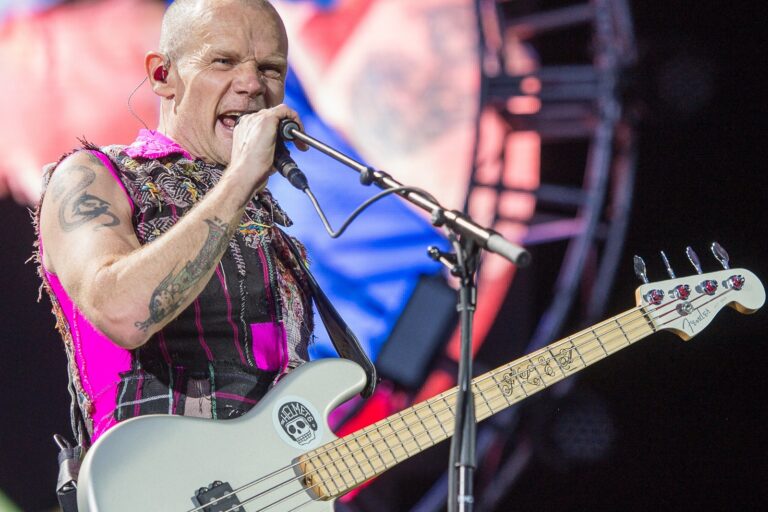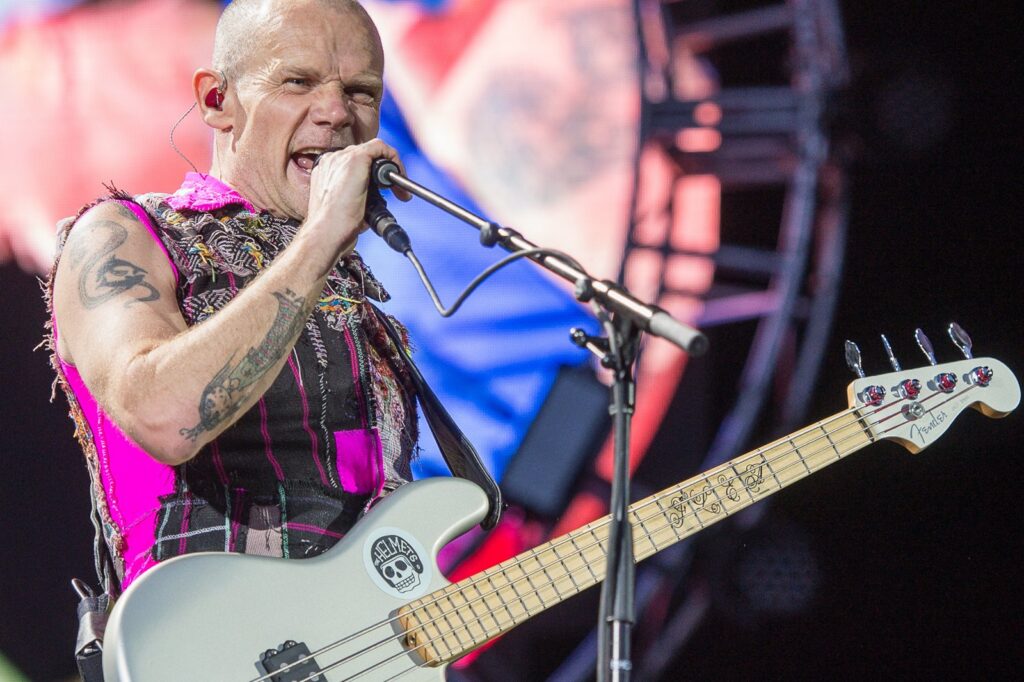
“So? What do you want us to do, turn it down?”
That was Flea’s answer to an interviewer who asked how he squared his love of art with all the money the Red Hot Chili Peppers were making. He gave it to Bass Player in January 1992, and the technical reality is that he never walked it back. “I’ll take all the money I can get,” he said, “and I won’t feel guilty about it at all.”
The complaint, as he told it, came up often. “People get on us because we make money,” he said. He had been explaining how much music mattered to him, and the question that followed was about his bank balance. To Flea the two things sat side by side without friction. Believing in music as an art form did not oblige him to refuse the pay.
A business like any other
He was not romantic about the trade. “The music business is just like any other business: it’s about buying and selling things,” he said. A few people in it genuinely care about music, but they are rare. Independent labels, in his telling, will take risks because they go for creativity rather than the biggest cheque.
The bigger houses got less charity. “There are a lot of slimy people in the industry, and most of them want to keep their expense accounts,” he said, so they back bands with “no creativity whatsoever”, acts that slot neatly into the latest trendy pop format. His verdict: “It’s disgusting.”
Musician or rock star
He had a specific target. Metal groups of men with straight, long blond hair, “about seven or eight of them”, all sounded the same to him, and he declined to name any. He called their output “the most unemotional, formulaic stuff in the world” and wondered aloud whether they even played instruments or were simply “poster children for bad music”.
Then came the line that explains the rest. “You don’t get paid for being a musician – you get paid for being a rock star.”
It is a wry piece of accounting, and he plainly applied it to himself without much squirming.
The band that wouldn’t cash in
None of this made him a cynic about music. “There’s good stuff out there, too,” he said, and he listed Fugazi, Jane’s Addiction, the Butthole Surfers, Nirvana, Public Enemy and Ice Cube.
Fugazi got the most praise. “You’ve got to respect a band with that much integrity,” Flea said. “They make it as easy and cheap as possible for people to hear and see them.” Then the comparison with his own band, made without embarrassment: “We want to make money and be comfortable, but they’re into being thoroughly righteous and compassionate down to the marrow.”
Fugazi’s frontman Ian MacKaye seemed to Flea to embody everything he wanted from a band. He said he had been reading Tom Robbins’ Jitterbug Perfume, in which a character with bees living in his head is killed by a police officer and the bees torment the police for weeks. If anything happened to MacKaye, Flea thought, all of nature should rise up against whoever opposed him. He added that the world was too messed up for that to happen.
He also had a word for Les Claypool of Primus, who is often compared with him. Flea thought the comparison was ridiculous. Claypool plays lead bass, with the band supporting the instrument. In the Chili Peppers, Flea said, his parts matter but are not lead bass; even his busiest playing is about the bottom end and the rhythm section. Different jobs, then. “It’s just a different trip.”
Sources
- If you’ve got a problem with rich rock stars, Flea has a question for you
- Flea
- Flea or Mosquito Bite? Bug Experts Explain the Key to Telling Them Apart
- Costumes, candy, and community: Flea Land hosts annual Boo Bash
- “I'll take all the money I can get, and I won't feel guilty about it at all. What do you want us to do, turn it down?” If you’ve got a problem with rich rock stars, Flea has a question for you
- My Biggest Challenge This Year | I Made a Book | November 8th Literature Flea Market @ Tokyo|Ryoko |リョウコ
Photo: Stefan Brending (2eight) (CC BY-SA 3.0)