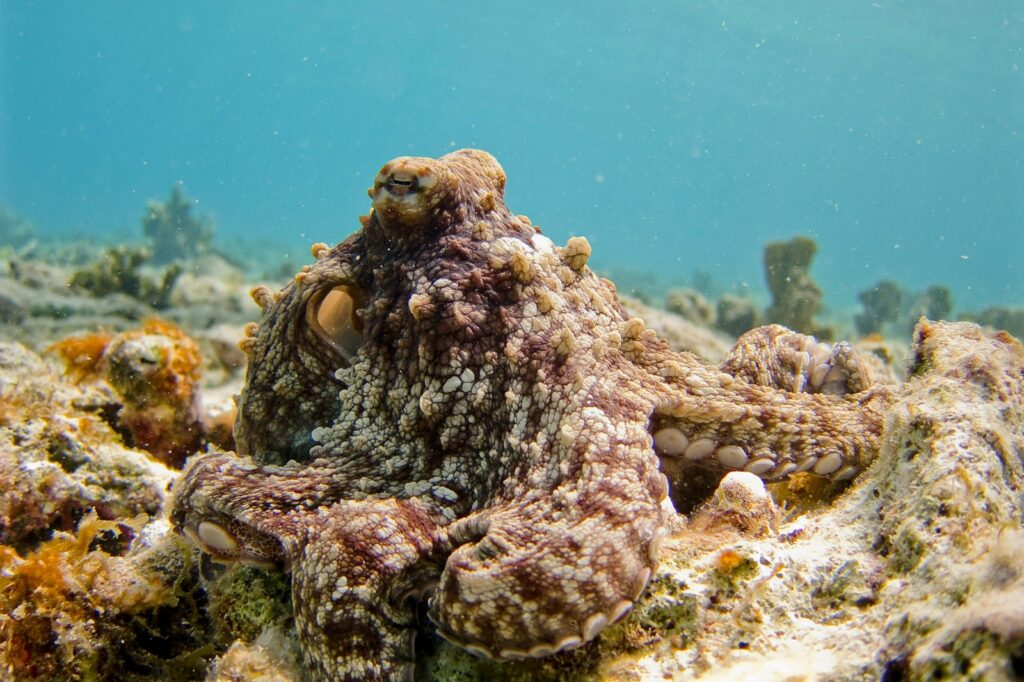
Blue Planet III arrives on Sunday 1 November on BBC One, BBC iPlayer and BBC America, and its makers say the footage is real in every frame. Producers have deliberately kept cloudier, less polished shots in the series to show viewers that the animals were not generated by AI.
Keeping the murk in
Nearly a decade after Blue Planet II shone a light on plastic pollution, the BBC hit returns with more animal behaviour and new technology. Elizabeth White, the executive producer, said AI “makes us want to be even more authentic.” The creatures filmed in the deep ocean, she said, “are probably more remarkable than AI could imagine and it’s completely real.”
Editing habits have shifted to match. White said that in the past, the plankton and debris in the water would usually mean a sequence was left out, or the team would frame out a boat or a buoy, or decide the water conditions were not good enough. Now those things stay in. “As AI booms we will probably lean more into the more organic,” she said, meaning murkier, less polished footage.
Jack Bootle, the BBC’s Head of Specialist Factual Commissioning, told journalists at a press screening: “No gen AI was used in this series. Not a single frame. It’s all real photography.” He added that natural history is in a golden age and viewers sometimes feel they have seen it all, so this series is “bursting with novel behaviour.”
Cameras and creatures
The series carries the world’s first underwater CCTV camera, nicknamed the stonefish cam and developed by producer and director Yoland Bosiger. It recorded dolphins using sea sponges to block holes in coral and trap fish, behaviour not seen on camera before.
Filming took four years across five oceans. Series producer Lara Bickerton said the team “continually innovated,” building a mini-dome camera to follow an octopus and a deep-sea selfie stick. Camera operators wore leg-mounted scooters for TikTok-style diving shots, and lasers were used to film deep-sea creatures.
Elsewhere, grouper communicate with another species of fish, 200,000 crabs line up in formation to feed, and sea urchins carry shells as sun hats. A penguin sequence echoes the iguana v snakes chase from Planet Earth II.
The oceans under threat
The final episode, Future Seas, takes up marine conservation. In one story, warmer seas driven by the climate crisis are killing off the sea anemone where clown fish live, and the fish try to repair their homes. The plastics theme from Blue Planet II continues with a story about pollutants and forever chemicals, White said.
David Attenborough returns as narrator; the news came in May 2026, as he turned 100. Bosiger said he was “very much involved” and changed scripts. White said: “What’s wonderful is he hasn’t lost his curiosity,” adding that he is still the little boy who gets excited when shown a new piece of footage.
The run, and the cost
There are six hour-long episodes. The first five each take a habitat: Tropical Seas, Open Ocean, Seasonal Seas, Polar Waters and The Deep. The BBC commissioned the series in 2022, and by February 2026 broadcasters in Australia, Brazil, Canada, China, Denmark, New Zealand and Spain had preordered it. More than 50 countries have signed up in total. It is a co-production of the BBC Natural History Unit, ZDF, France Télévisions and Skai TV, in partnership with The Open University.
The first Blue Planet aired in 2001 and won multiple Emmy and BAFTA TV awards for its music and cinematography. Blue Planet II was the most watched programme of its year.
Asked whether the BBC’s cost-cutting drive would hurt BBC Studios’ natural history reputation, White said she could not comment, but noted that Blue Planet III saved money by using more local crews on location than earlier series did.
Sources
- BBC Audio | The Media Show | Is TV news still fit for purpose? Celebrity media injunction and Blue Planet III returns
- Blue Planet III
- Blue Planet III features cloudier footage to prove authenticity amid AI boom
Photo: Vlad Tchompalov / Unsplash (Unsplash License)