The fight over Suno has spilled out of the main courtroom and into the filing cabinets of everyone who ever dealt with it. In the copyright cases against the AI music platform, subpoenas are flying in both directions, and what they could shake loose may matter in virtually every suit Suno faces.
The Majors Go After Suno’s Backers
Universal Music and Sony Music, the majors suing Suno (Sony is also suing Udio), have filed motions to compel against DistroKid and against Suno stakeholders Bond Capital, Lightspeed, Menlo Ventures and ex-Menlo principal C.C. Gong. Lightspeed technically moved to quash before any motion to compel appeared.
The demands cover the investors’ professional relationships with Suno executives, what they knew about training-related copyright liability, and the market-dilution risks of generative AI music, among much else. The breadth matters. From Menlo, the non-Warner majors want “ALL DOCUMENTS and COMMUNICATIONS RELATED TO copyright law in relation to SUNO”, a request that, together with a similar one on their recordings, would presumably expose the terms of Suno’s licensing pacts with Warner Music, Believe and BMG. Universal and Sony have been eyeing those agreements for some time.
Past revelations are the reason to watch. Round Hill and Reservoir Media both cited The Atlantic’s searchable AI Watchdog training database in their recent complaints against Suno.
Suno Sends Its Own Subpoenas
Suno is pressing too. It is pursuing a motion to compel from the Mechanical Licensing Collective for DSP play-volume data from 2021 to the present. Suno and Udio believe the numbers could show that AI outputs are not diverting meaningful streams and royalties from proper music. The MLC, after months of talks, is pushing back and has pointed in part to the streaming services’ alleged opposition. Suno answered that the services never put their concerns in writing, though opposition would hardly be a stretch. Fraud has run rampant on AI-generated tracks, and the services have not historically prioritised transparency, and they lean heavily on the majors’ catalogs.
The same question, whether AI audio really earns royalties, leads to Apple Music. Apple is trying to quash a deposition demand covering its AI royalties and policies, including “contractual provisions that limit” its “ability to preference or ‘steer’ toward lower-cost or no-cost content”. Suno also wants minimum-royalty guarantees paid to Universal and Sony, provisions on gen-AI content, how royalties are calculated for AI versus non-AI audio, the prevalence of streaming fraud on the platform, and projections for Apple Music’s commercial viability without the plaintiffs’ catalogs.
Universal’s Gaming Deal
Away from the courtroom, Universal Music Group announced a licensing agreement on 22 October with TYGER, an adaptive music platform for gaming that uses AI. Select recordings from Universal’s recorded music and publishing catalogs will arrive on TYGER’s paid subscription service and its free, ad-supported tier, with tracks adapting in real time to live gameplay. “Gaming is where the next generation spends its time,” said Nick Venti, TYGER’s CEO and co-founder. TYGER is live with more than 400,000 songs, mostly from independent artists, and plans to relaunch later this year with an updated ad-supported tier and subscription offering.
What Comes Next
Apple’s motion to quash the “irrelevant, overbroad, and disproportionate” subpoena, or to obtain a protective order, is scheduled for December 1.
Sources
- MLC, Apple Music, & Others Face Subpoenas Amid UMG v. Suno
- Universal Music Group
- TYGER AND UNIVERSAL MUSIC GROUP ANNOUNCE STRATEGIC LICENSING AGREEMENT FOR IMMERSIVE MUSIC EXPERIENCES ACROSS GAMING – UMG
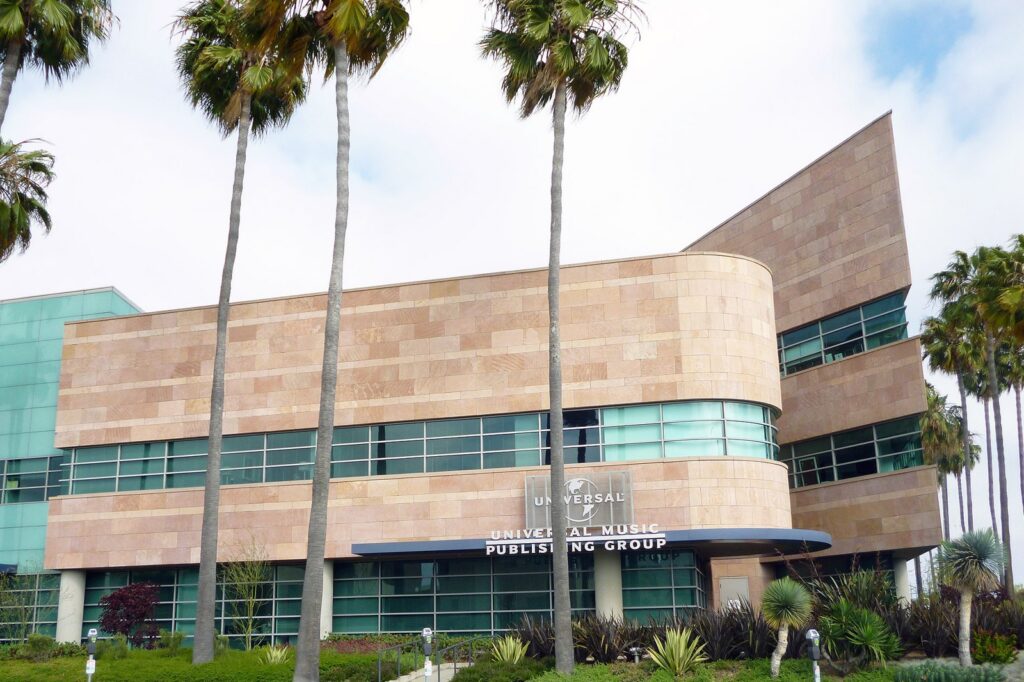
Photo: Coolcaesar (CC BY-SA 3.0)