From Passive Viewing to Immersive Auditory Events
The latest edition of Humanitas, a column focused on the arts and humanities at Yale, includes a recap of serving on the Venice Film Festival jury alongside new lunchtime chamber music breaks. This integration transforms screenings from passive viewing into immersive auditory events, elevating cultural prestige through a historic fusion of visual storytelling and acoustic art.
It operates as part of the Venice Biennale, an exhibition covering art, architecture, dance, music, theatre, and cinema. These works are experienced at separate exhibitions, including the International Art Exhibition and the International Festival of Contemporary Music. The festival continues to be one of the world’s most popular and fastest-growing events.
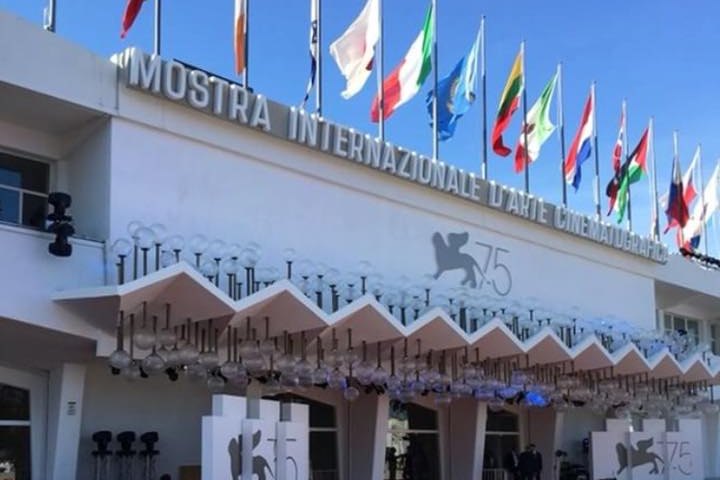
Screenings take place in the historic Palazzo del Cinema on the Lungomare Marconi. During the festival, Venice hosts many events and parties, interviews and meetings with filmmakers and actors every night. Venues open all night, and parties are held in beautiful casino palaces and gardens.
A Historic Hub Since 1893
The Venice Biennale was created by the Venice City Council on 19 April 1893. It is one of the world’s oldest exhibitions of art. The range of work at the Venice Biennale now covers Italian and international art, architecture, dance, music, theatre, and cinema.
The film festival branch is held in late August and early September on the island of the Lido in the Venice Lagoon. Founded by Giuseppe Volpi, member of the National Fascist Party, the event was established in Venice in August 1932. In 1951, FIAPF formally accredited the festival as one of the “Big Five” International film festivals worldwide.
The Big Three European Film Festivals include Venice, Cannes, and Berlin. The Toronto International Film Festival is based in Canada, while the Sundance Film Festival is located in the United States. In the 1930s, the government and Italian citizens were heavily interested in film. Of the money Italians spent on cultural or sporting events, most of it went for movies.
The majority of films screened in Italy were American, which led to government involvement in the film industry. This period saw a yearning to celebrate Italian culture in general. The Venice International Film Festival was created by Giuseppe Volpi, Luciano de Feo, and Antonio Maraini in 1932 with this goal in mind.
The Jury Experience and Moral Themes
Francesco Casetti, Sterling Professor of Humanities at Yale, served as a juror this year. He is the first scholar without a professional industry background to serve on the main jury. Casetti began attending the Venice International Film Festival when he was a college student at the Catholic University of Milan.
He slept in small hotels, stood in line to attend screenings, and discussed films late into the night with friends during his early years. This year, Casetti returned to the festival — this time as a juror alongside jury president Maggie Gyllenhaal. Serving on the Venice main jury was a great honor, but it was also demanding work.
In addition to watching the films, they discussed them together almost every day for several hours. For the final verdict, they deliberated from 9:30 a.m. until 4 p.m. The jury awarded the festival’s highest honor, the Golden Lion for Best Film, to “Woman Unknown,” a Danish film directed by May el-Toukhy.
The film is set in Denmark immediately after World War II, when those who collaborated with Nazi occupiers were coming under scrutiny. Casetti described it as a beautiful and courageous film centered on a moral dilemma: should a woman feel guilty for what she did in the past out of love or necessity? Other films that impressed him included the South Korean film “Possible Love,” which is now streaming on Netflix.
“Dau” was a biopic about the Soviet physicist Lev Landau. “Empire at Sea” was an interactive drama about a group of pioneering climate scientists. Cinema remains an extraordinary bond, capable of bringing together very different people. It is just a crazy dream, but perhaps fewer war rooms and a few more movie theaters could make the world a better place.
Expanding Beyond Cinema to Dance and Architecture
The festival includes separate exhibitions for contemporary music, theatre, and dance alongside cinema. The International Theatre Festival and the International Festival of Contemporary Dance are among these events. The International Kids’ Carnival is also part of the annual schedule.
The Biennale College Archive offers writing residencies for young graduates under 30. Applications were open to graduates from all over the world with an excellent knowledge of Italian language, spoken and written. The call was dedicated to young scholars who would carry out a search of sources and documents for the drafting of a text.
The theme for this year was “In Minor Keys by Koyo Kouoh.” The program is now in its 9th edition. It is one of the activities of the Historical Archive of La Biennale – International Research Center on Contemporary Arts. Research programs are developed also in connection with cultural institutions and universities as well as special projects.
Recently, due to the growing number of American productions in its sections, besides international critically acclaimed titles, the festival became a launchpad of many films for the awards season. This has prompted a higher chance of Academy Award recognition for selected films. The Yale Review, in partnership with the Yale English Department and the Poynter Fellowship in Journalism, has launched “Writing in Public.”
This series addresses the transition from writing as a private act to one that engages a wider audience. Each event is free and open to the public. The encouraging part of this expansion is how it broadens the scope of artistic expression beyond traditional cinema boundaries.
Future Implications for Multi-Sensory Environments
The integration of live chamber music into a major film festival redefines the cinematic experience by altering the audience’s emotional engagement with films. Live audio adds a layer of depth that passive soundtracks cannot provide. This approach suggests a shift in how major festivals curate multi-sensory environments.
Humanitas, a Yale column, featured a recap of serving on the Venice jury alongside lunchtime chamber music breaks. These breaks offer a chance for reflection between screenings or during the day. The campus opportunity for music-filled lunchtime breaks complements the evening events.
Thanks to Swiss Seaside Foundation, a non-profit organization founded in 2008 in Switzerland that supports projects related to children, youth, family and the environment. This support helps sustain initiatives like the writing residencies. The festival hosts interviews, meetings, and parties in casino palaces and gardens every night.
The new call for applications for graduates under 30 from all over the world has a deadline of 25 October for Writing on Art. Applications are open until this date. The Biennale College Archive – Writing in Residence programme is designed to collect critical texts in a publication of La Biennale di Venezia.
The encouraging part of these developments is the continued growth and evolution of the festival structure. Patients should talk to their doctor about health concerns, but for artists, the path forward involves embracing new formats. The future looks promising for festivals that value both visual and auditory storytelling equally.
Sources
- Venice Film Festival
- The Venice Film Festival, ‘Writing in Public,’ and lunchtime chamber music
- HISTORICAL ARCHIVE | Biennale College Archive – Writing in Residence 2026
Photo: Bart ryker (Public domain)