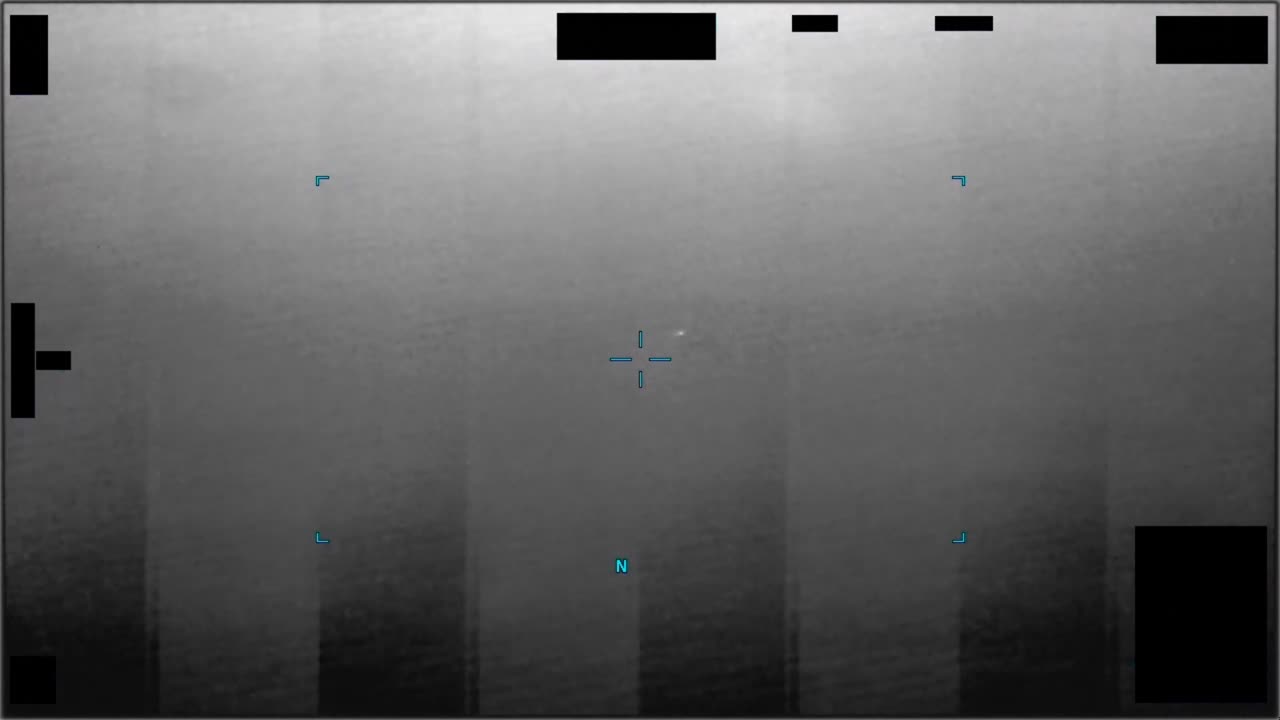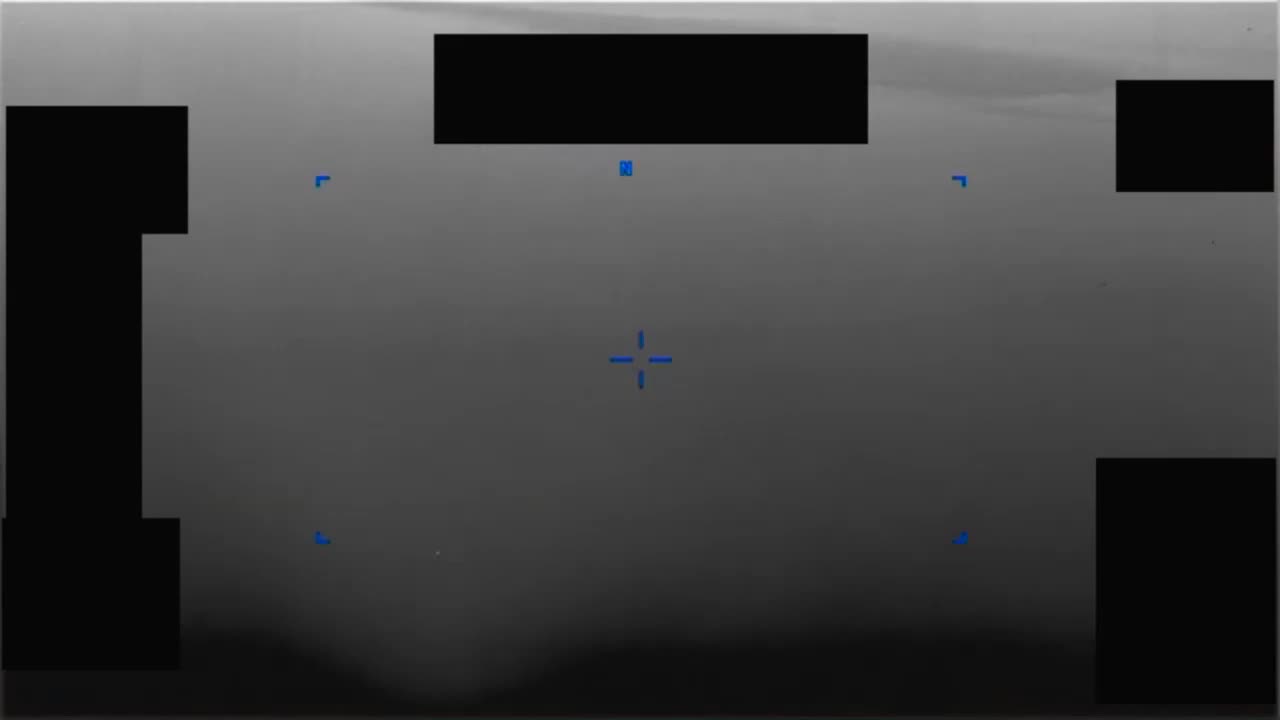

One dot trailing a line of dots. That is the sum total of what a U.S. Air Force operator reported seeing in the Arabian Gulf in 2020. A newly released Department of War document, filed under the PURSUE archive, makes that much clear. Everything else—the mission, the aircraft, the unit, the precise coordinates—is gone. Blacked out. Redacted under national security exemptions (b)(1)1.4a and (b)(1)1.4c.
The document is a standardized Mission Report, or MISREP. The military uses these forms to log Unidentified Anomalous Phenomena sightings for the All-domain Anomaly Resolution Office. This one carries a SECRET classification. Its declassification date is June 3, 2048. It was released on May 8, 2026. The report is accessible on the war.gov domain.
The service involved was the Air Force. The Major Command was AFCENT—United States Air Forces Central Command. That tells you something. AFCENT runs air operations across the Middle East, including the Arabian Gulf. The operator was on duty there, on some mission, in some aircraft, and saw something.
The core of the report sits in the GENTEXT section. The Department of War describes that section as holding “important qualitative, contextual information.” In this case, the qualitative information is a single phrase: “line of dots followed by a trailing dot.”
The official description of the record includes a caution. It states that all descriptive and estimative language in the report “reflects the reporter’s subjective interpretation at the time of the event.” That language should not be taken as a conclusive indication of any object’s intrinsic nature. In plain terms: the operator wrote down what he thought he saw. The military is not vouching for the thing itself.
But that caution cuts both ways. The operator filed a report. He used a military form. He submitted it through channels. The document was classified SECRET. It stayed secret for 26 years past the event. None of that suggests a casual observation or a misinterpretation of Venus. The military treats these reports seriously enough to classify them and hold them for decades.
The redactions are heavy. The exemptions cited—(b)(1)1.4a and (b)(1)1.4c—cover information related to intelligence sources, methods, and activities. That means the redacted details are not just operational trivia. They are considered sensitive enough to harm national security if disclosed. The specific mission, the unit, the aircraft type, the exact location. All withheld.
What remains is the pattern. A line of dots. A trailing dot. That is the observation. No altitude. No speed. No duration. No indication of whether the dots were distant lights or nearby objects. The operator did not say. Or the report does not let him say.
The document is part of the PURSUE archive. PURSUE is the Department of War’s program for collecting and analyzing UAP reports. It replaced earlier efforts that had been scattered across services and agencies. The MISREP form is the standard intake tool. This particular MISREP is one of many. But it is one of the few that has been released with any usable content at all.
The Arabian Gulf is a busy place. Military aircraft, commercial shipping, naval vessels. It is also a place where the U.S. military has reported other UAP incidents in the past. The 2004 USS Nimitz encounter happened in the Pacific, not the Gulf. But there are other reports from the region, some still classified, some leaked. This one is now public.
The report does not say what happened next. No mention of pursuit. No mention of contact. No mention of the object disappearing or staying. Just the observation, written down, filed, classified, and now released. A line of dots. A trailing dot. And a long wait until 2048 before the full record is supposed to come out.