The weather report comes early in “Disclosure Day.” A Kansas City TV meteorologist, played by Emily Blunt, is on air when something extraterrestrial seizes hold of her mid-broadcast. From there the film follows a cybersecurity whistleblower, played by Josh O’Connor, who is set on telling the world the truth about aliens.
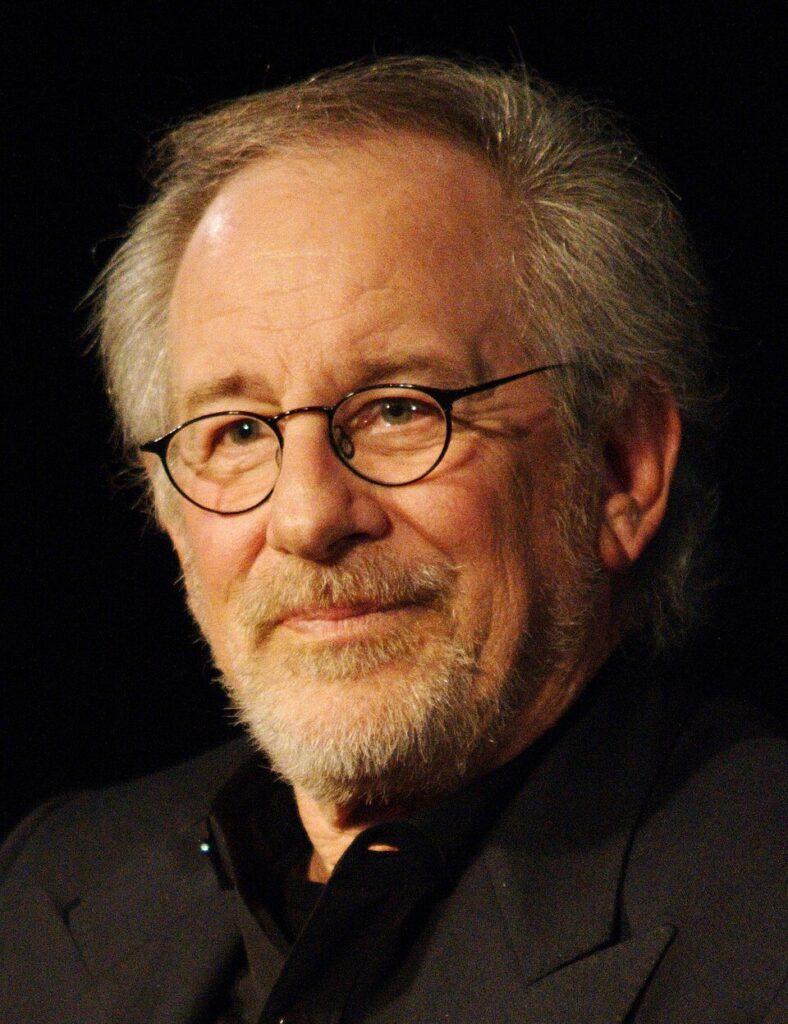
Steven Spielberg directed it, and he does not think of it as pure invention. Yes, the film will be sold as science fiction. But in an interview with AP he said it is “much more reflective of the world as it is evolving and discoveries that are being made as we speak.”
Spielberg went further. “I’ve been a believer since I made ‘Close Encounters’ 50 years ago,” he said. He pointed to what he called “overwhelming circumstantial evidence” collected over the past decades and said he accepts that extraterrestrials have already tried to make contact with us.
O’Connor describes the film as “a film about hope and humanity and understanding.” That fits the pattern of Spielberg’s earlier alien stories, “Close Encounters of the Third Kind” (1977) and “E.T. the Extra-Terrestrial” (1982), which pictured a first meeting with visitors as something peaceful rather than an invasion.
What pushed him to the subject
Spielberg has followed reports of alleged alien encounters for years. The 2023 House Subcommittee on National Security hearing on unidentified anomalous phenomena (UAPs) gave him fresh material. One witness, former Air Force intelligence officer David Grusch, testified that the government was hiding a multi-decade program that captures and reverse-engineers technological objects.
The Pentagon has since put out two large batches of declassified UAP files, and a third is planned. The documents contain no proof of alien spacecraft, alien bodies or a reverse-engineering program. They do show that many sightings stay unresolved because the data is thin. Among them are a senior US intelligence officer’s account of “orange orbs flaring up and down” and footage from a US military drone over Syria in 2021, in which an object suddenly accelerates as if going into warp speed and vanishes.
Avi Loeb, the Harvard astrophysicist who advocates a scientific search for extraterrestrial intelligence, spoke to DW after the second batch came out in May. “I do think it’s the obligation of scientists to pay attention to anomalies, especially if they are reported by reliable authorities,” he said. He added that the subject has been discussed widely for decades among military personnel, intelligence officers and people inside the Pentagon.
Even if the unknown aircraft in the footage were built by humans, Loeb argued, it would still matter. “If the US intelligence agencies and the Pentagon are not familiar with the kind of motion that it exhibits, at the very least it poses a national security threat, because apparently someone else on Earth was capable of developing such an object.”
A long record of cases
Most sightings have been explained as natural phenomena or hoaxes, and the topic has long sat on the fringe. The best-known case is Roswell in 1947. A New Mexico rancher found odd debris, and the military first announced it had recovered a “flying disc,” then retracted that and called it a weather balloon. The US government later said the debris came from a classified program built to detect Soviet nuclear tests. Many theorists still believe it was a crash and a cover-up.
In 1961, Betty and Barney Hill described, under hypnosis, being taken aboard a spacecraft and examined by nonhuman beings after seeing a strange object while driving through New Hampshire.
The 2004 “Tic Tac” encounter is newer and better documented. US military pilots watched a white, capsule-shaped object make unusual maneuvers off the California coast. Videos came out years later, and government investigations acknowledged the objects remained unidentified. The case rests on radar data, military sensors and official reports.
Loeb is cautious about it. Scientific method, he says, means ruling out known optical effects before claiming a technological origin, and the Tic Tac may be nothing more than camera glare. Still, he keeps looking. “Even if one in a million objects that we look at is not from this Earth,” he said, “that would be the biggest discovery ever made by humanity.”