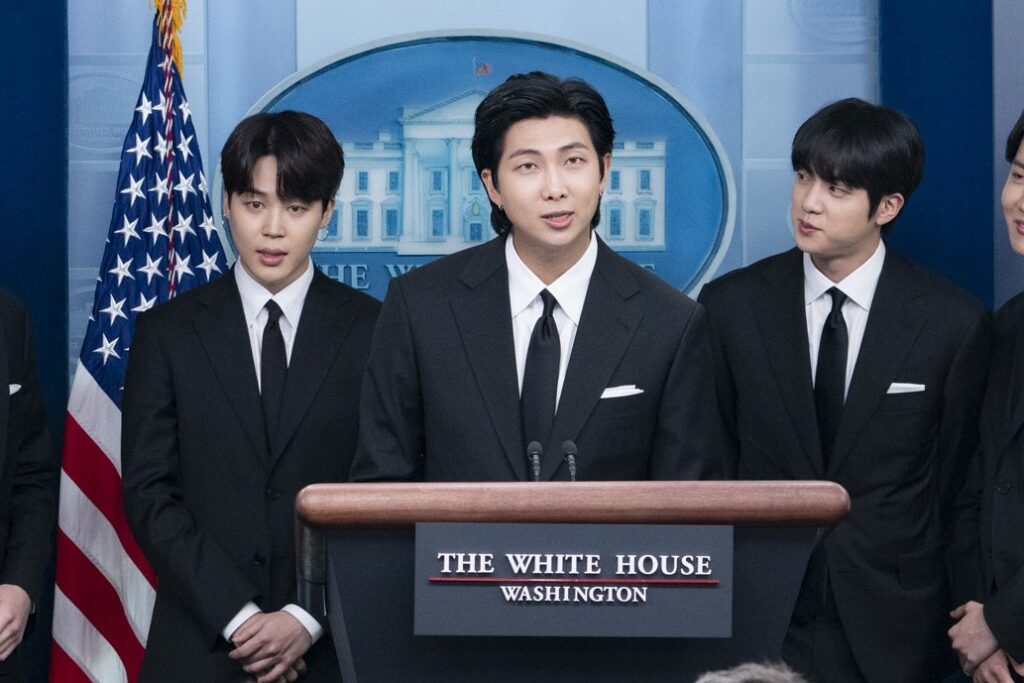
LOS ANGELES, November 13, 2026 — The Recording Academy has added categories and tweaked eligibility, but regional genre silos persist, prompting new protests from global stars like BTS.
A Boycott Over a New Category
On the ground, the scene in Los Angeles is one of a music industry at a crossroads. The Recording Academy’s decision to introduce the Best Asian Pop Performance category for the 2027 awards was meant as a step forward. The category, which requires a “meaningful use of one or more Asian languages,” aims to recognize “contemporary popular music originating from or widely recognized within Asian markets, including K-Pop, J-Pop, and C-Pop.” But by nightfall, the policy had become a flashpoint for controversy.
South Korean supergroup BTS, a five-time Grammy nominee, announced on social media they would not submit for the 2027 awards. “Rather than music being divided by region or language, we hope music itself can be heard and loved for what it is,” the band wrote. Following their lead, K-pop group Stray Kids also announced its intent to boycott. Recording Academy CEO Harvey Mason Jr. responded on Instagram, saying he was “saddened but respected the group’s decision.” He clarified, “The Asian Pop category was created to celebrate the depth, diversity and extraordinary growth of pop artistry coming out of Asia… It’s never to divide, but to expand who is recognized.”
A History of Reform and Resistance
This tension is not new. The Grammy rule changes are a direct response to a long history of artist protests and public criticism. The Academy overhauled many of its Grammy categories after the 2011 ceremony, a move that reshaped the landscape for the 2012 awards. This ongoing process of adjustment reflects a persistent struggle to balance tradition with the evolving global music scene. The Academy’s stated goal is to ensure its recognition system keeps pace with how music is created and consumed around the world.

The Mechanics of Category Creation
So, how does the Academy decide to create a new category? The process involves defining eligibility based on criteria like language and regional origin. The new Best Asian Pop Performance category is a prime example, establishing specific linguistic and regional boundaries for inclusion. These rules are designed to ensure that a new category targets a distinct and identifiable musical style, rather than simply expanding an existing one. The creation of such categories is a deliberate attempt to shine a dedicated spotlight on important artists who might otherwise be overlooked in broader, more general fields.
Recent Rule Changes and Expanding Fields
The Academy has continued to tweak its rules in recent years. In June 2026, a rule change allowed entrants in the Best New Artist category to be submitted four times instead of three, opening new pathways for crossover artists. The 68th Annual Grammy Awards in 2026 featured a total of 95 categories, demonstrating the Academy’s commitment to a granular approach to musical recognition. For the 69th Annual Grammys, the general field categories will have eight nominees for the fourth consecutive year, and the eligibility period ran from August 31, 2025, through August 28, 2026.
The Future of Global Recognition
The implications of these rule changes are significant for global music recognition. The Academy’s stance, as articulated by Mason Jr., is that more categories mean more artists’ work is recognized. However, the boycott by BTS and Stray Kids shows that not all artists agree this approach is effective. They argue that creating regional categories can feel like a form of segregation, dividing a global audience rather than uniting it. The debate highlights a fundamental question for the Recording Academy: how to structure awards that both celebrate cultural specificity and transcend it. Nominations for the 69th Grammys will be announced November 16, 2026, at The Square in Times Square, New York City.
Sources
- BTS is boycotting the Grammys. It's part of a long history of category controversies
- Grammy Awards
- 2027 Grammy Nominations Final Predictions: Album of the Year
- What to know about the 69th Grammy nominations, presenters and more
- UW Buchanan Center Special Events Presents Grammy Winner Miguel Zenón with the Wyoming Jazz Ensemble Nov. 23
- Grammy Award-winning singer, band wows students at Houghton performance
Photo: The White House (Public domain)