Tom Cruise’s “Digger” has grossed $49 million worldwide against a production budget of $125 million to $180 million, a gap that puts the Alejandro González Iñárritu satire among the costliest studio flops in recent memory. The question worth asking is not whether it failed, but how a film with the biggest star in Hollywood and a two-time Oscar-winning director got there.
A Big Budget and a Bigger Risk
Iñárritu conceived “Digger” after finishing “The Revenant,” and he wrote the screenplay with Sabina Berman, Alexander Dinelaris Jr. and Nicolás Giacobone, from a story he developed with Berman and Jez Butterworth. Cruise stars as Digger Rockwell, an aging oil magnate whose drilling triggers an ecological disaster, and he produced the film as well. The supporting cast is deep: Riz Ahmed, John Goodman, Sandra Hüller, Michael Stuhlbarg, Robert John Burke, Emma D’Arcy, Burn Gorman, Sophie Wilde and Jesse Plemons.
Filming ran from November 2024 to May 2025 in the United Kingdom, and the film premiered in Leicester Square, London, on September 22, 2026. Warner Bros. Pictures released it in the United States on October 2, 2026. That timing matters: it was the final Warner Bros. release before Paramount Skydance completed its acquisition of Warner Bros. Discovery on October 6, 2026. A studio in the middle of a corporate handover has less appetite for a slow-building theatrical run, and “Digger” never got one.
The Critics Fired First
The reviews were sharply split, and the negative ones set the terms of the conversation. The Guardian’s Peter Bradshaw called it an “exasperatingly shallow, laborious, self-congratulatory satire,” and The Independent’s Clarisse Loughrey wrote that it arrives “with all the force of a light breeze.” On Rotten Tomatoes it holds a 53 percent critic score from roughly 340 reviews, the lowest of Iñárritu’s career, below “Bardo, False Chronicle of a Handful of Truths” at 60 percent. Audiences were kinder, at 77 percent, but by then the damage was done.
John Goodman, who plays the US president, told the Happy Sad Confused podcast that the early coverage “kind of killed us before we even opened,” pointing to headlines predicting a $5 million opening as “good reason for people to avoid it.” He added: “It hurt.” Goodman also defended the film as “a huge swing” and said he was proud of it. The critical split ran through the trades too: Variety’s Clayton Davis praised Cruise and Goodman as “delivering stellar work” while concluding that “not all the dots connect.”
What the Film Actually Was
Part of the commercial problem was that “Digger” was not the movie its marketing sold. Trailers promised a broad, rollicking comedy with Cruise in old-age prosthetics and a Texas accent. What audiences got was stranger: a satirical black comedy that, partway through, reveals its events to be scenes in a stage play called “Fossil Fools,” with an actor named Curtis Markson playing Digger. That structural gambit divided critics, and it gave word of mouth a hard job. The Martinez Tribune’s reviewer called it “the most bizarre film released this year by a major studio” while praising Cruise’s performance as his best in decades.
The craft was not the issue. Oscar-winning makeup artist Kazu Hiro transformed Cruise with 12 prosthetic pieces covering his belly, nose and chin, cutting a six-hour process down to about two and a half hours at Cruise’s insistence. That work drew attention of its own, but attention to a makeup chair does not fill seats.
The Numbers Against the Investment
On a budget reported as high as $180 million, a $49 million global gross leaves a shortfall that marketing and distribution costs only widen. For scale, that is roughly a quarter of the production budget recovered at the box office, before theaters take their cut. The Independent reported the worldwide figure at around $47 million against the $180 million budget; other accounts put the gross near $50 million on a budget above $125 million. Either way, the arithmetic is brutal.
Yet the film has vocal defenders. Guillermo del Toro said it “delivers in scale, ambition and reach at a theatrical screen level,” calling it “daring, bold and Cinematically complex.” Bill Burr said on his podcast that “critics are out of their minds” for trashing it, and Anne Hathaway left a glowing Letterboxd review calling it “brilliant” and “smart and trippy and aggressive and funny and ambitious.” Goodman compared the reception to the Coen brothers’ films, noting that “Barton Fink” and “The Big Lebowski” flopped initially and found audiences later.
What Comes Next
Despite the box office, the film is still expected to be a contender in the upcoming awards race, according to Yahoo Entertainment, with Cruise’s performance and Hiro’s makeup among its plausible categories. For Iñárritu, “Digger” marks the widest swing of a career built on them, and its failure will shape how studios weigh auteur-driven satires with nine-figure price tags. For Cruise, it is a rare commercial miss in a career defined by them, and one he chose as producer rather than inherited. The 53 percent critic score and the 77 percent audience score will sit side by side on Rotten Tomatoes, a tidy record of a film that asked a lot of its audience and got a fraction of it back.
Sources
- Digger (2026 film)
- Tom Cruise's Digger is a polarizing original, and that's good – Martinez Tribune
- How Kazu Hiro Transformed Tom Cruise Into ‘Digger’ With Prosthetics for His Belly, Nose and Chin
- Digger star says critics ‘killed’ Tom Cruise movie before it even hit cinemas
- John Goodman admits scathing “Digger” reviews ‘hurt’ him: ‘Killed us before we opened’
- John Goodman Says Negative Digger Reviews ‘Hurt’: ‘They Kind of Killed Us’
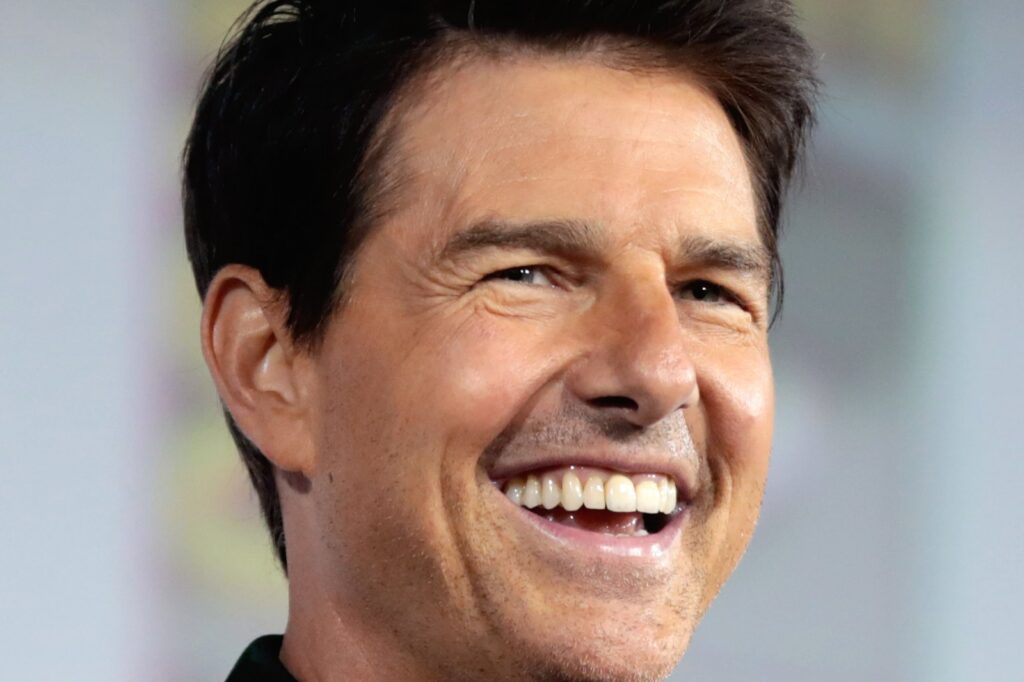
Photo: Gage Skidmore (CC BY-SA 3.0)