Laika’s Wildwood has opened to strong box office numbers, matching the performance of the studio’s historical classics despite relying on a much smaller distributor. This result signals a viable path for independent stop-motion animation to compete with major studios in the current market.
The success of Wildwood is not just a box office victory; it is a strategic signal about the future of handmade animation. For years, the industry calculus suggested that stop-motion was a niche medium, too slow and too expensive to sustain large-scale commercial releases. Laika, the Oregon-based studio, has spent the last two decades dismantling that assumption. By evolving from a commercial-focused entity to a feature-film powerhouse, the studio has carved out a distinct position in the entertainment landscape. The opening weekend numbers for Wildwood prove that this model works, even when the studio is not backed by the massive distribution machinery of a conglomerate like Disney or Warner Bros.
From Commercial Work to Feature Focus
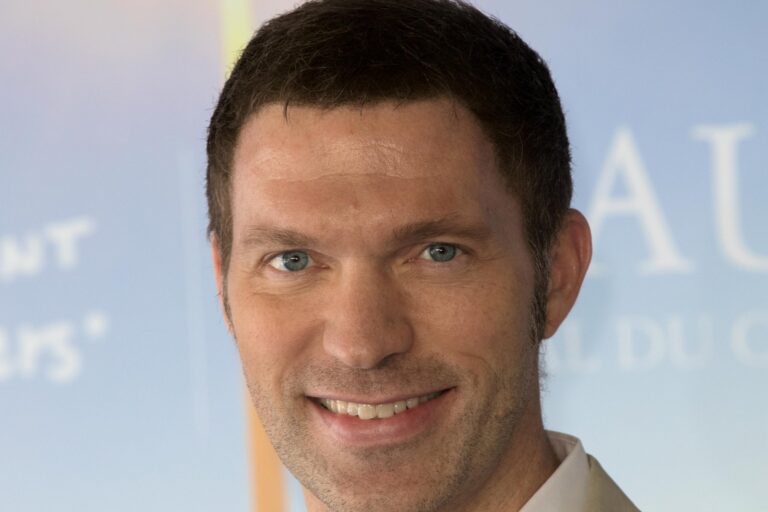
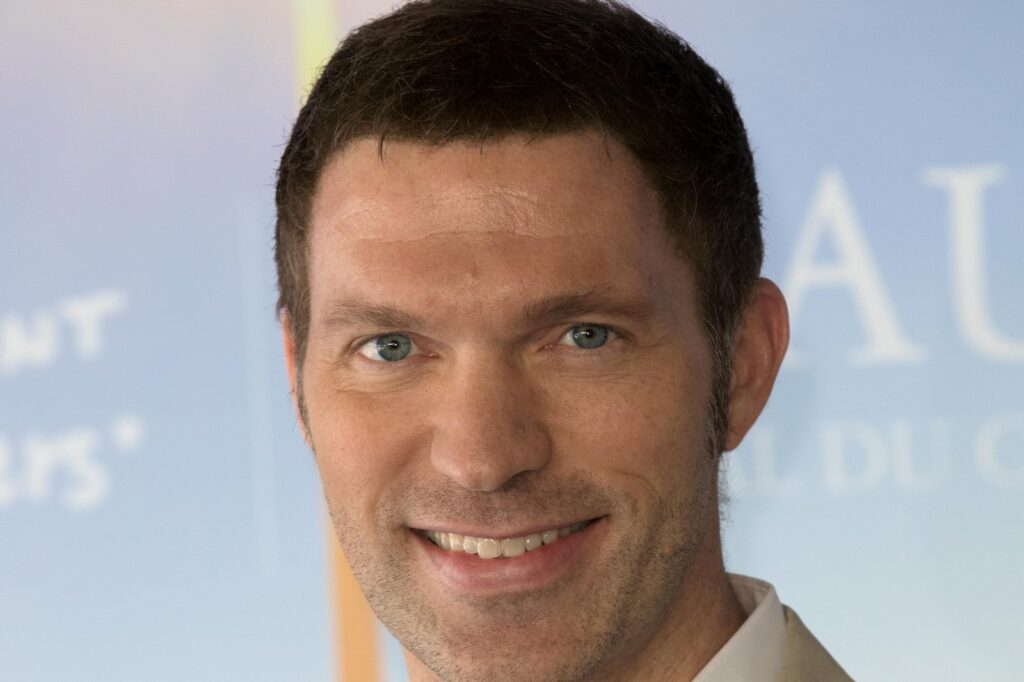
To understand the significance of Wildwood’s opening, one must look at the studio’s origins. Laika is an American independent stop-motion animation studio located in Hillsboro, Oregon. It was founded by Phil Knight, the co-founder of Nike, who acquired the financially struggling Will Vinton Studios in 2002. Knight’s son, Travis Knight, who had worked at the studio as an animator, now serves as Laika’s president and CEO. The studio was originally named after Laika, the dog sent to space by the Soviet Union in 1957, a nod to the experimental and pioneering nature of the work.
In its early days, Laika operated with two distinct divisions. Laika Entertainment focused on feature films, while Laika/house handled commercial content, including advertisements and music videos. This dual structure allowed the studio to fund its feature work through steady commercial revenue. However, in July 2014, the studio made a strategic pivot. It spun off its commercial division, which is now known as HouseSpecial, to focus exclusively on feature film production. This was a high-stakes move. By cutting its ties to the commercial sector, Laika bet its entire future on the ability to sell theatrical films. The broader stakes of that decision are now clear: the studio had to prove that audiences would pay premium prices for handmade animation in a market dominated by computer-generated imagery.
The Economics of Handmade Animation
The production of Wildwood illustrates the scale of this commitment. Travis Knight describes the film as his life’s work and Laika’s most expensive production to date. The film took 16 years to create, involving 231 weeks of active production. This is not a digital process where assets can be copied and pasted. Every frame is a physical reality. The production included 233 handmade puppets, each overlaid with hundreds of thousands of replacement faces to capture subtle expressions. The team also built 132 practical sets, which included 728 miniature trees representing 10 species specific to the Pacific Northwest.
These numbers are not just trivia; they represent a massive logistical and financial undertaking. Knight has noted that Laika does more with less than its competitors, putting more onscreen than one might expect for the amount of dollars invested. This efficiency is the core of the studio’s business model. While major studios like Pixar and Illumination spend hundreds of millions on their films, Laika operates on a fraction of that budget. The strategic advantage is that the studio can take risks on original stories that might not appeal to the broadest possible audience, because its overhead is lower. Wildwood, adapted from Colin Meloy’s 2011 fantasy novel, is a prime example of this. It is a PG-13 original fantasy, a genre that is often risky for independent distributors.
Competing Without the Major Studios
The most striking aspect of Wildwood’s release is its distribution. The film is being handled by Fathom Entertainment, a Denver-based company with far fewer resources than the major studios that distributed Laika’s previous hits. Films like Coraline, The Boxtrolls, and Kubo and the Two Strings were backed by larger entities such as MGM and Focus Features. Those distributors had the marketing budgets and theater relationships to push the films into the mainstream. Fathom, while a good partner for Laika, does not have that same reach. Its 2024 re-release of Coraline grossed more than $51 million worldwide, which is impressive, but it is a different kind of success than a new theatrical release.
Despite this, Wildwood has performed well. It earned approximately $4.3 million on its opening Friday, including roughly $1 million from Thursday previews. Deadline reported the day at $4.2 million from 2,942 theaters. The film is projected to open with a weekend gross of $11 million to $14 million. This opening day figure is comparable to the studio’s classics. It dwarfs the $1.6 million that Missing Link earned on its first day. It runs close to the openers of Kubo and the Two Strings at $4.1 million, Coraline at $4.5 million, ParaNorman at $4.6 million, and The Boxtrolls at $4.9 million. The fact that Wildwood matches these numbers without the backing of a major studio is a significant strategic win. It suggests that the brand strength of Laika is strong enough to drive audiences to theaters on its own.
Word of Mouth as a Strategic Asset
In an era where marketing budgets are often the deciding factor in a film’s success, Wildwood has relied heavily on critical and audience reception. Pre-release tracking was inconsistent, with Boxoffice Pro projecting $6 million to $10 million and Box Office Theory forecasting as low as $4.5 million to $9.5 million. Some optimistic reports eyed $15 million to $21 million. The film landed in the middle, which is a solid result given the uncertainty. The key driver has been word of mouth. The film has earned an A CinemaScore, tying the studio’s best audience grade. It also holds a 100% critics’ score and a 98% audience score on Rotten Tomatoes.
This level of acclaim is rare and valuable. It creates a sense of urgency among viewers who want to see a film that is being widely praised. The film’s best region is the West, which accounts for 32% of its gross compared with a norm of 26% for other movies. The top location so far is the AMC Burbank, which earned $29,000. Premium large formats are delivering about 15% of the weekend. These details suggest that the film is drawing a specialized, engaged crowd. They are not just casual viewers; they are fans of the craft. This is the core of Laika’s audience. They understand the value of handmade animation and are willing to pay for it.
The result of Wildwood’s opening is a clear message to the industry. Stop-motion animation is not a relic. It is a viable, competitive medium that can stand alongside major studio productions. Laika’s evolution from a commercial studio to a feature-film powerhouse has paid off. The studio has built a brand that is recognized for its quality and its unique aesthetic. The success of Wildwood shows that this brand has staying power. It signals that independent animation can thrive, even in a crowded market. For Laika, this is more than a box office win. It is a validation of its entire business model. The studio has proven that it can compete with the giants, not by outspending them, but by out-crafting them. The broader stakes are clear: the future of animation is not just digital. It is handmade, and it is here to stay.
Sources
- Laika's 'Wildwood' Scores a Strong Opening Day at the Box Office, Keeping Pace With the Studio's Classics Despite a Small Distributor
- Laika, LLC
- ‘Wildwood’ Director Travis Knight on Spending 16 Years to Create His Stop-Motion “Masterpiece”
Photo: Thierry Sollerot from Vernon (Eure, Hte Normandie), FRANCE (CC0)