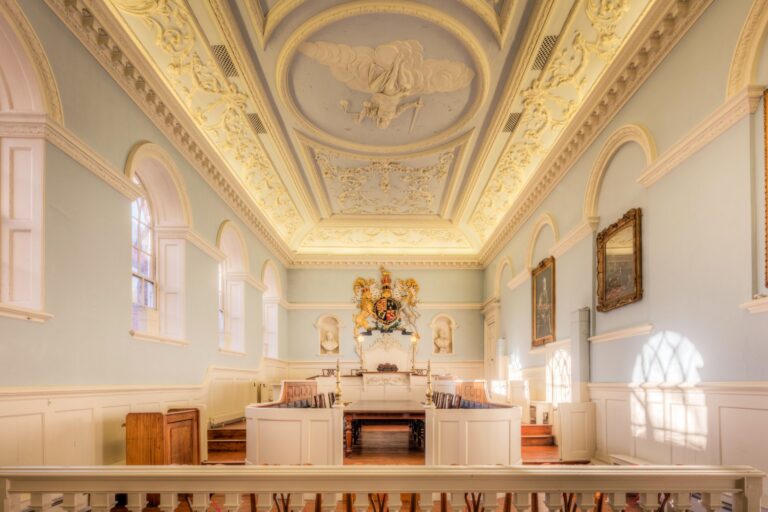
A British celebrity accused of using his fame to pursue “inappropriate and exploitative sexual activities with a large number of girls and young women” lost his High Court bid on Tuesday to block two media organisations from publishing the allegations and naming him. Mr Justice Nicklin dismissed the claim for an injunction, but the man remains anonymous for now under a temporary order allowing him time to appeal.
The ruling closes, at least at this stage, one of the more unusual privacy cases to reach London’s courts in years: a celebrity asking a judge to silence a story not on the grounds that it is false, but on the grounds that publication would kill him.
How the Case Reached the High Court
The man, referred to in court as PPT, sued Independent Television News (ITN) and Guardian News and Media (GNM), publisher of The Guardian, over investigations both outlets intend to publish. According to the BBC, the allegations describe a decades-long pattern: that he abused his status “over the course of many years” to contact and forge relationships with young women and teenagers in an attempt to have sex with them. He denies the allegations in full.
ITN and the Guardian told the court their reporting rests on interviews with more than 100 people. Their barrister, Gavin Millar KC, said many of the women involved “have been traumatised by the claimant’s alleged conduct and have suffered mental health crises and mental illness as a result”. He described the intended stories as allegations of “inappropriate and exploitative sexual activities” and argued there was no proper basis “to restrain the publication of public interest journalism”.
The Suicide Risk at the Centre of the Argument
PPT’s case rested on his mental health. His lawyer, Sara Mansoori KC, told the court that naming him would be “highly likely” to lead him to take his own life, and that he had already attempted suicide twice: once after receiving letters from the two outlets seeking his response to the allegations, and again after absconding from hospital. She said he had been hospitalised for months, detained involuntarily and examined by more than ten doctors, and that he “has no intention of returning to public life”.
She rejected the suggestion that the concerns were manufactured. “This is not a case where an individual has spuriously raised ‘mental health’ concerns in the face of an impending publication that they do not wish to occur,” she said in written submissions. The only reason publication would not prove fatal, she argued, was that her client “would be locked up and prevented from his desire to end his life”.
A medical report prepared for the court found that inpatient treatment could offer “significant, but not complete mitigation of the risk”, and that treatment lasting perhaps months had “a realistic potential to reduce the risk”. Millar seized on that, warning that the case risked “dragging judges into assessing the causes of suicidal ideation, which are for professionals and not for a judge”. The obligation to keep the man safe, he said, fell on the hospital.
What the Judge Decided
Nicklin refused the injunction. “The claimant’s claim for an injunction was dismissed,” he said in his ruling, adding that the court “did not determine whether the allegations, or any of them, were true, and the dismissal of the claim does not amount to approval of any publication the defendants may decide to make”.
In remarks reported by the Daily Mail, the judge accepted the risk was “genuine, grave and closely connected to the court’s decision”, and that publication would cause “acute and potentially prolonged mental suffering”. But he held that NHS psychiatric services were enough to meet the state’s duty to protect the man’s life, and that the duty did not extend to silencing the press. The injunction, he said, “would have been an exceptionally serious restriction upon freedom of expression”, blocking both the outlets’ investigations and their sources’ accounts, potentially for an indefinite period. He called the allegations “serious” and “capable of making a significant contribution to public debate”.
He also warned the public against trying to work out who PPT is. “The existence of online speculation, however confidently expressed or widely repeated, does not authorise anyone to identify, or purport authoritatively to identify, PPT in connection with these proceedings,” he said. “Nor does repetition transform speculation into established fact.”
Why British Courts Weigh Privacy Against Press Freedom
The case illustrates a structural difference between British and American law. The UK has no direct equivalent of the First Amendment. Instead, courts balance Article 8 of the European Convention on Human Rights, which protects private and family life, against Article 10, which protects freedom of expression. Neither right automatically outranks the other, so judges weigh a person’s privacy interest against the public interest in reporting. In practice, British courts have granted anonymity sparingly, and rarely on mental health grounds alone. As defamation lawyer Paul Tweed told Variety before the ruling, judges “don’t grant that very lightly” and will examine closely whether the suicide risk is genuine or being used as an excuse.
What Happens Next
The anonymity order stays in force while PPT considers an appeal. Nicklin gave him until 9 November to lodge one, and said any notice of appeal or request for more time must reach the Court of Appeal by Monday afternoon. Mansoori indicated her client may appeal but told the court he is “very vulnerable” and has “not been in a position to give us instructions”.
If no appeal materialises, ITN and the Guardian will be free to publish both the allegations and the man’s name. Until then, one of the most speculated-about identities in Britain stays legally sealed, and the judge’s warning against guessing stands.
Sources
- U.K. celebrity accused of sexual misconduct loses legal battle to keep his identity secret
- Unnamed celebrity accused of 'inappropriate sexual activities', court hears
- U.K. Celebrity Loses Injunction Bid to Prevent Sexual Misconduct Allegations From Being Published, but Will Remain Anonymous Pending Appeal
- Mystery celebrity fights to keep identity secret amid disturbing sexual misconduct allegations
- Famous male celebrity facing sexual misconduct claims loses bid to hide identity
- Celebrity loses High Court bid to keep sex allegations secret
Photo: Michael D Beckwith (CC0)