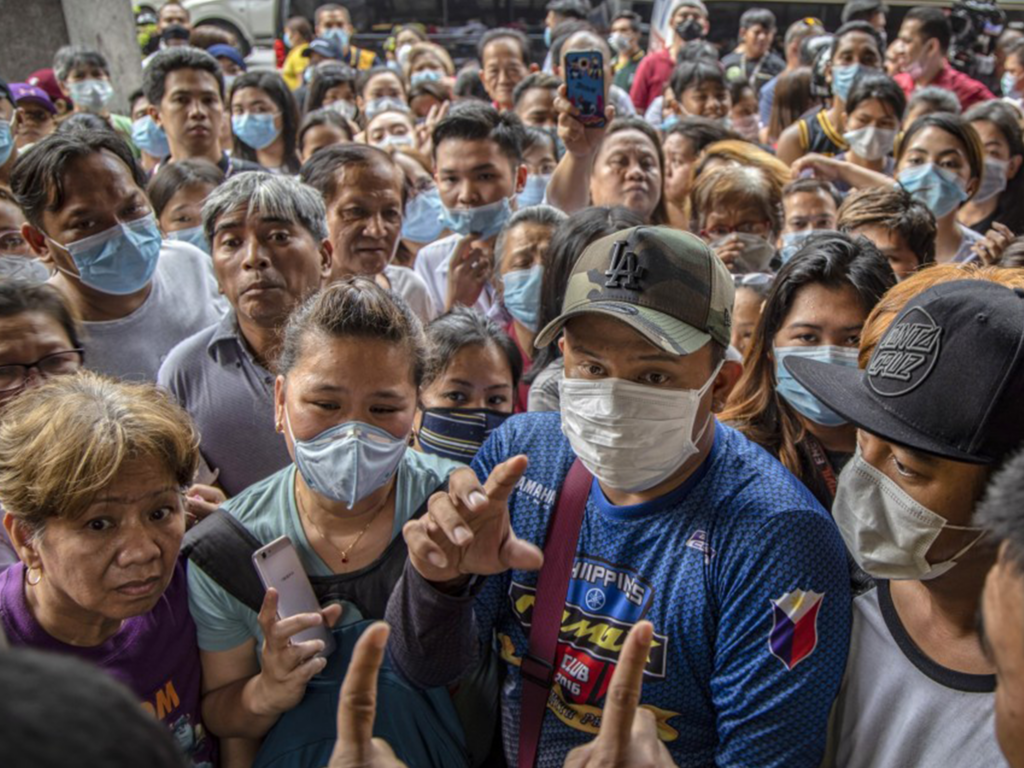
The Philippines declared a public health emergency on Monday, March 9, as officials feared the new coronavirus was already moving undetected through Manila and its suburbs.
“The outbreak… constitutes an emergency that threatens national security, which requires a whole-of-government approach,” President Rodrigo Duterte said in a proclamation released early that day.
The declaration frees up funds for local governments preparing for widespread community transmission. It also loosens the rules for buying testing kits, masks, protective gear and other supplies health workers may need.
Supplies are the weak spot. The government has only 4,500 testing kits, expects 2,000 more from the World Health Organisation, and is weighing offers from China and South Korea. Health Secretary Francisco Duque said the impression among politicians that his ministry was not doing enough “is largely because of our limited testing supplies.”
Alert levels and a lockdown question
On Saturday the Health Ministry raised its alert to “code red sub level 1”, the second-highest level, after confirming local transmission. Duque called that a pre-emptive step. “Moving from localised transmission to sustained community transmission can happen very quickly,” he said after the emergency was declared.
The top level, code red sub level 2, would come into play if several communities saw spread. It would let authorities quarantine or lock down entire communities and suspend school and work, at municipal, city or provincial level, with police and soldiers helping. Duque said a lockdown was “premature.” In his words, “We have to wait for evidence of sustained community transmission.”
Neighbourhoods act on their own
Local governments have not waited. Three cities and two towns suspended classes this week so classrooms could be disinfected. One town handed out face masks, disinfectants and vitamins in the neighbourhoods around the home of a 62-year-old Filipino who tested positive. A city mayor ordered shut the Muslim prayer hall he used to attend. Shopping malls have started disinfecting, and hospitals and companies have put out their own statements to counter rumours spreading online.
The 62-year-old was the country’s first case of community transmission, and his 59-year-old wife has also been infected. Neither had been outside the Philippines recently.
By Saturday the Health Ministry counted 10 confirmed cases, after two more Filipinos, a Taiwanese and an American tested positive. One of the 10 was a Chinese national from Wuhan who travelled to the Philippines and later died, the first death from the outbreak reported outside China. Two Chinese patients have recovered. Those still infected are in state-run hospitals equipped to handle epidemics.