
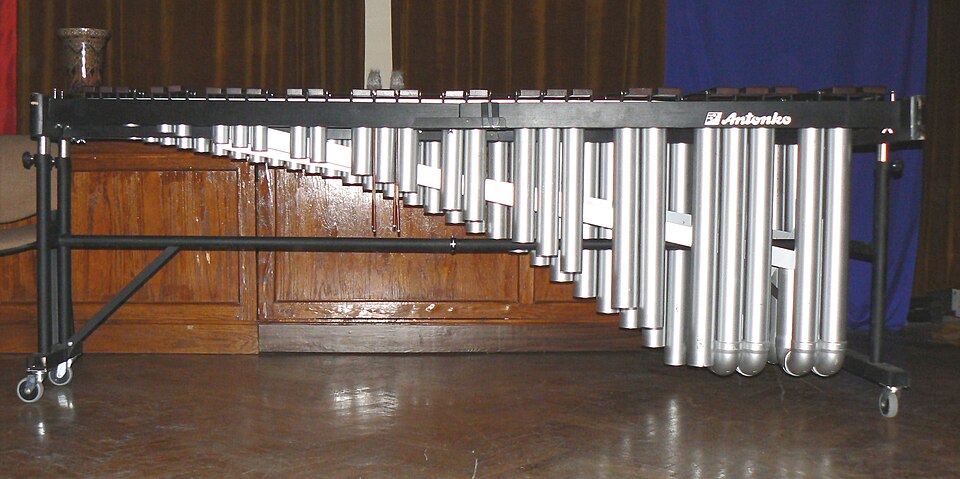
Mika Stoltzman has been playing the marimba for decades. Her new album, Crossing the Bar, released June 23 on Avie Records, doesn’t treat the instrument as a novelty. It treats it as a serious voice.
The program runs from Johann Sebastian Bach to John Zorn. That is a wide gap.
The album covers it without apology. Stoltzman arranged Bach’s Chaconne from the Partita No. 2 for marimba and strings. It opens the record.
The piece is monumental on violin. On marimba, it becomes something else.
The approach favors line and resonance over percussive attack. The result is contemplative, not aggressive. Then comes Zorn’s Breathturn: Part 1.
The transition is abrupt. That is the point. The album does not pretend these worlds fit neatly.
It lets them sit side by side. The marimba and clarinet dialogue in the Zorn piece creates an experimental atmosphere.
Richard Stoltzman, Mika’s husband and regular collaborator, plays clarinet. The two have worked together for years. That history shows.
Claude Debussy sits in the middle. The arrangement of Rêverie is a standout.
The marimba’s warm, woody sound suits the impressionistic contours of the piece. It evokes mood without forcing it. The instrument can do that.
Not everyone knows it can. Miho Hazama, a 21st-century composer, also appears on the album. The program moves fluidly across eras.
Baroque, Romantic, modern, contemporary. The album brings together arrangements and original works.
Several are world premieres. The collaborations are tight. The musicians know each other.
Stoltzman shapes each variation of the Bach with careful attention to dynamics. The transcription gains an unexpected expressive density.
The marimba is often seen as a percussion instrument first. Loud, bright, rhythmic. This album pushes back.
The instrument can be lyrical. It can sustain. It can whisper.
The title Crossing the Bar suggests movement. The album does cross boundaries.
Between genres. Between centuries. Between what a marimba is supposed to do and what it can do.
The record industry has not always known what to do with solo percussion albums. They are rare.
They sell modestly. But they matter. Stoltzman has spent years building a case for the contemporary marimba.
This album is another piece of evidence. It does not argue loudly. It simply plays the music.
The Bach is not a showpiece. The Debussy is not a stunt.
The Zorn is not a provocation for its own sake. Each piece is chosen because it works on the instrument. The album flows.
That is hard to do with such a range of material. The transition from Bach to Zorn may feel sudden.
But the overall shape holds. The marimba provides a consistent voice across all of it. The same instrument that handles the Baroque counterpoint handles the modern dissonance.
It handles the dreamy impressionism too. Richard Stoltzman’s clarinet is a key element. The two instruments dialogue.
They trade lines. They push each other.
The collaboration is not decorative. It is structural. The album would be different without it. Crossing the Bar is out now on Avie Records.
It is not a gimmick album. It is a serious program by a serious player.
The marimba does not need defending. It just needs playing. Stoltzman plays it.
{“@context”: “https://schema.org”, “@type”: “NewsArticle”, “headline”: “Mika Stoltzman’s New Album Treats Marimba as a Serious Voice”, “description”: “Mika Stoltzman has been playing the marimba for decades. Her new album, Crossing the Bar , released June 23 on Avie Records, doesn’t treat the…”, “datePublished”: “2026-06-23T17:37:00+00:00T09:30:00+00:00”, “author”: {“@type”: “Person”, “name”: “Sebastian Smith”}, “publisher”: {“@type”: “Organization”, “name”: “InfoPulse Today”, “url”: “https://newsfeed.infopulsetoday.com/”}}




