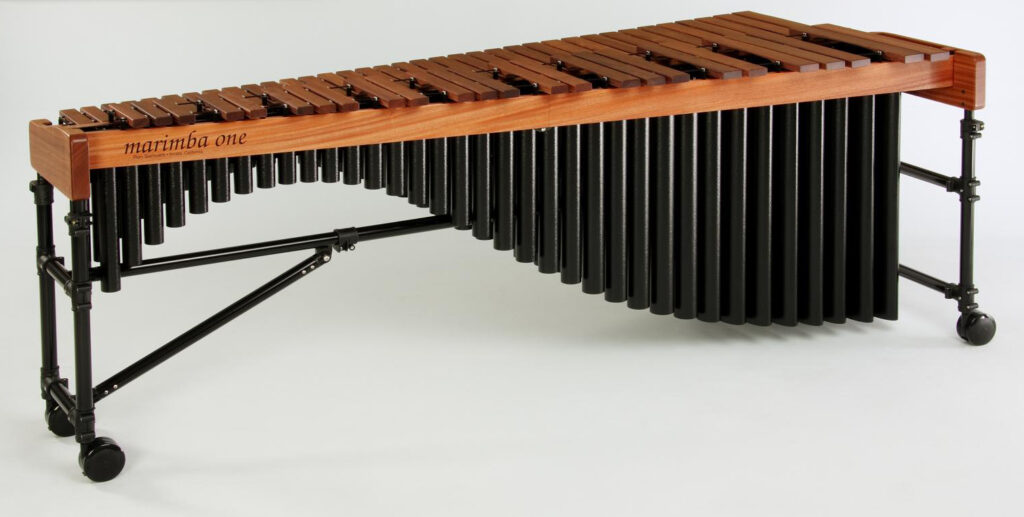
Mika Stoltzman’s new marimba album Crossing the Bar makes a quiet argument for the instrument’s future. The percussionist, working through Avie Records, has assembled a program that jumps from Bach to John Zorn, with Claude Debussy and composer Miho Hazama bridging the centuries. The album’s real subject is not the marimba’s range but its voice.
That voice is warm, woody, and capable of sustaining melody in ways the instrument’s percussive reputation might suggest otherwise. The collaboration with clarinetist Richard Stoltzman, her husband, pushes this further.
Their dialogue on Zorn’s Breathturn: Part 1 tilts into experimental territory. The clarinet and marimba do not compete. They trade shapes.
The result is a sound that feels less like a concert hall and more like a conversation between two musicians who have long since stopped explaining themselves to each other. That ease matters.
It lets the music breathe. The tracklist reads like a dare. Bach’s Chaconne from the Partita No. 2 opens the album, arranged for marimba and strings.
It is a monumental piece, often played on violin with a kind of fierce intensity. Stoltzman takes a different path. She shapes each variation with attention to dynamics, favoring continuity of line over percussive attack.
The reading is contemplative. The marimba’s resonance gives the Chaconne an expressive density that feels unexpected.
It is not an imitation of the violin version. It is a rethinking. Then comes Debussy’s Rêverie.
The arrangement stands as the album’s most enchanting moment. The marimba’s timbre fits the impressionistic contours of the work naturally.
The instrument evokes emotion without forcing it. This is not a novelty act. It is a demonstration of the marimba’s capacity for subtlety.
The album includes several world premieres. The program moves fluidly across styles and eras. That fluidity is the point.
The transition from Bach to Zorn may feel abrupt to some listeners. But that abruptness is also a statement.
The marimba can handle both the 18th century and the 21st without breaking stride. The instrument is not limited to the role of rhythmic support. It can carry the melodic and harmonic weight of a composition.
What does this mean for the marimba’s place in contemporary music? The album suggests the instrument is moving toward a more lyrical, melodic conception of itself.
The repertoire is expanding. Collaborations like the one with Richard Stoltzman open doors. The album’s title, Crossing the Bar, is apt.
It references a boundary. The marimba is crossing into territory usually reserved for strings or winds. Whether this signals a broader shift in percussion’s role in classical and experimental music remains to be seen.
But the evidence here is strong. The album does not preach.
It plays. The variety of the program creates a sense of cohesion not through sameness but through the instrument’s consistent voice. The marimba sounds like itself whether it is playing Bach or Zorn.
That consistency is the real achievement. The instrument is not a chameleon.
It is a distinct voice in a crowded field. Crossing the Bar makes that voice impossible to ignore.