Ken Russell’s 1971 historical psychological horror drama The Devils has returned to theaters in a stunning 4K restoration, debuting at the 2026 Cannes Film Festival before a theatrical rollout by Warner Bros. Clockwork that has confounded box-office expectations for a 55-year-old banned film. In its opening weekend, the uncut version played in 350 theaters across North America and grossed nearly $2 million, prompting an indefinite extension of its run.
The Scandal of 1971
When The Devils first arrived, it was a cause célèbre. Directed, written, and co-produced by Russell, the film starred Vanessa Redgrave as the physically deformed, sexually repressed Sister Jeanne des Anges and Oliver Reed as the charismatic Father Urbain Grandier. United Artists, which had initially pitched the project, bowed out after reading Russell’s screenplay, deeming it too controversial; Warner Bros. stepped in to produce and distribute. The film’s graphic portrayal of violent and sexual content within a religious context earned it an X rating in both the UK and the US, leading to bans in several countries and heavy censorship elsewhere. It remained banned in Finland until 2001.
History on Trial
The narrative dramatizes the 1634 Loudun possessions in France, drawing from Aldous Huxley’s 1952 non-fiction book The Devils of Loudun and John Whiting’s 1960 play The Devils. Grandier, a priest with political influence in the town, is accused of witchcraft after Sister Jeanne’s obsessive visions. Behind the theological spectacle, Cardinal Richelieu—played by Christopher Logue—manipulates the hysteria to eliminate Grandier as a threat to the centralizing power of King Louis XIII. Russell frames the possessions not as supernatural events but as mass hysteria weaponized by the state.
The Long Road to Restoration
For decades, the film existed largely in butchered cuts and bootlegs of sub-VHS quality. The turning point came in 2002, when film critic Mark Kermode, a longtime friend of the late director, discovered previously censored footage—reportedly mislabeled and nearing decomposition—in the Warner Bros. archives. Kermode helped oversee the painstaking restoration, which utilized elements from Russell’s personal copy and the original negative. The fully restored, unedited version finally premiered at Cannes in May 2026, receiving an official NC-17 rating from the Motion Picture Association for “sexual content/graphic nudity.”
Why It Resonates Now
Critics who once dismissed the film as empty exploitation now describe it as a subversive masterpiece of ferocious entertainment value and genuine spiritual depth. The Guardian noted that the true obscenity on display is not the sexualized imagery but the violence of authority. Variety observed that the film’s relevance has sharpened with time: a story of politically directed mass hysteria and institutional corruption speaks directly to an era where the manipulation of truth feels immediate. The robust box office suggests audiences are not merely satisfying curiosity but engaging with a work that, against this backdrop of censorship and rediscovery, feels less like a relic than a provocation.
Sources
- The Devils (film)
- Sin and cinema: A review on “The Devils” – The Rider News
- The Devils review – Ken Russell’s 1971 possessed-nuns tale is a frenzied aria of confrontation and hysteria
- Mark Kermode on restoration of 'The Devils' and the director's Catholicism
- 'The Devils' Review: 2026's Most Visionary Masterpiece Is a 55-Year-Old Uncensored Re-Release
- Ken Russell’s ‘The Devils’ Feels More Relevant Than It Did 55 Years Ago. That’s Because It’s About a World Gone Mad
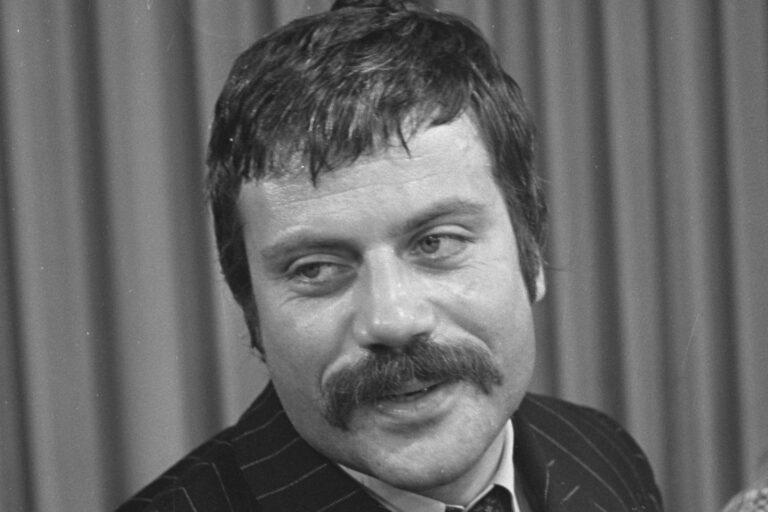
Photo: Jack de Nijs for Anefo (CC BY-SA 3.0)