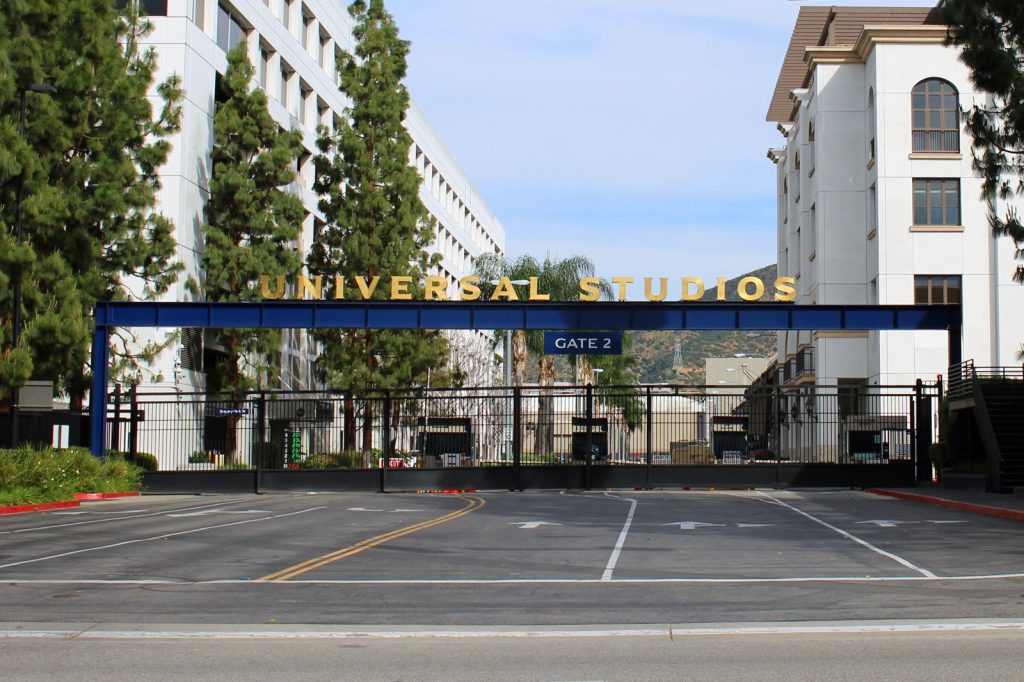
NEW YORK, July 20 — The calculus that built Universal Pictures was forged not in a boardroom but in a revolt against an empire. One hundred and fourteen years after its founding, the studio remains the oldest operating film company in the United States, a surviving titan of an industry it helped reshape by breaking the Edison Trust’s chokehold on American cinema. That origin story is worth revisiting.
Universal City Studios LLC, headquartered at the Universal Studios complex in Universal City, California, was incorporated on April 30, 1912, as the Universal Film Manufacturing Company in New York City. The founding coalition was a who’s-who of early film entrepreneurs: Carl Laemmle, Mark Dintenfass, Charles O.
Baumann, Adam Kessel, Pat Powers, William Swanson, David Horsley, Robert H. Cochrane, and Jules Brulatour. Laemmle, a former dry goods merchant who had observed box office takings and calculated a better path, became president in July 1912 and drove the enterprise.
A Break From the Trust
This was not simply a business merger. It was a strategic war declaration. The Motion Picture Patents Company, known as the Edison Trust, collected fees on all aspects of movie production and exhibition — a monopolistic structure that squeezed independent producers.
Laemmle had started the Yankee Film Company in June 1909 with his brothers-in-law Abe Stern and Julius Stern, evolving that venture into Independent Moving Pictures, or IMP, with studios in Fort Lee, New Jersey. IMP became a cornerstone of the Universal merger, which also absorbed the Powers Motion Picture Company, Rex Motion Picture Manufacturing Company, Champion Film Company, Nestor Film Company, and the New York Motion Picture Company.
Laemmle understood the broader stakes of breaking Rockefeller-style control over culture. The Edison Trust refused to give actors billing or screen credits, treating talent as interchangeable cogs. Laemmle’s countermove was to exploit that rigidity.
He promoted Florence Lawrence, known as ‘The Biograph Girl’, and actor King Baggot — likely the first instance of a studio using stars in marketing. That decision, grounded in a simple observation that audiences remembered faces, helped birth the star system that still drives global box office today.
Vertical Power and Studio Dominance
Universal was built as a vertically integrated company — production, distribution, and exhibition under one corporate entity — central to the Studio system era. During Hollywood’s golden age, it was classified as one of the ‘Little Three’ majors. Today, it is one of the ‘Big Five’ film studios and a member of the Motion Picture Association.
The corporate architecture has evolved: Universal is now the flagship studio of Universal Filmed Entertainment Group, the film studio arm of NBCUniversal, a subsidiary of Comcast. Strategically, its position within the Comcast empire gives it distribution heft and financial resilience that the 1912 founders could hardly have imagined.
The studio’s current lineup of sibling brands is telling. Universal Filmed Entertainment Group includes eight film studios: Focus Features, Amblin Partners (in which Universal holds a 20% stake), United International Pictures (50% stake), Working Title Films, Universal Animation Studios, Illumination, and DreamWorks Animation. That portfolio signals a deliberate strategy — covering adult dramas, genre fare, animation, and global distribution without over-reliance on any single creative engine.
Franchise Dominance and Record-Breaking Legacy
Universal’s most commercially successful film franchises include Fast & Furious, Jurassic Park, and Despicable Me. But the studio’s library also contains landmark individual films: Jaws and E.T. the Extra-Terrestrial, both of which became the highest-grossing films of all time during their initial releases. What this signals is a longevity of cultural influence that spans generations — a rare durability in an industry that cycles through trends with brutal speed.
Universal is the oldest surviving film studio in the United States and the fifth oldest globally, behind Gaumont, Pathé, Titanus, and Nordisk Film. That ranking places it in a select cohort of companies that predate the World Wars, the rise of television, the digital revolution, and the streaming era — yet continue to define what Hollywood produces for the planet.
The Strategic Picture
The broader stakes for Universal today involve maintaining that dominance across theatrical exhibition, streaming through NBCUniversal’s Peacock, and theme park operations that translate screen properties into physical experiences. The studio’s stability is a function of corporate ownership, but its identity remains rooted in the rebellious calculus of a former dry goods merchant who decided that actors deserved names and the Edison Trust deserved a fight. What to watch next: Universal’s ability to defend its market share as the Big Five studios recalibrate for a post-strike, post-pandemic landscape.
The corporate machinery is formidable — Comcast’s resources, a deep franchise bench, and a historical track record of adapting to disruption. The 1912 playbook of breaking a monopoly may not be needed today, but the strategic lesson — that controlling production, distribution, and exhibition matters — has never been more relevant.