A 60-foot Cyclops, built by hand and worked on set by a puppeteer. That is how Christopher Nolan chose to film Polyphemus in The Odyssey, which opened on July 17, 2026 with a budget of $250 million and almost no green screen.
The puppet was operated by Bill Irwin, who handled TARS in Interstellar. Its movements, voice and presence were performed live, and forced perspective plus careful camera placement sold the scale. The film took in $264 million worldwide in its first week and sits at 8.4 on IMDb, according to a trade-minded breakdown of the release.
Practical first, not CGI free
Nolan shot on IMAX 70mm across six countries, built real ships to ancient Greek specifications and used real Mediterranean weather. His stated philosophy was blunt: a film of The Odyssey is not done right if it does not look difficult.
When Circe turns Odysseus’s men into pigs, there is no digital compositing. Samantha Morton manipulated an animatronic head on camera, sculpting the transformation in real time. Anne Hathaway, watching from the set, said the cast was right there and still did not know how it was done.
The “zero CGI” line is mostly true but not absolute. The sea monster Scylla was rendered digitally, and the giant whirlpool sequence used digital compositing, as the Hollywood Reporter noted. Industry coverage called those effects moderate. The accurate description is that Nolan reached for practical solutions wherever physically possible and kept digital tools for what could not be built on a soundstage.
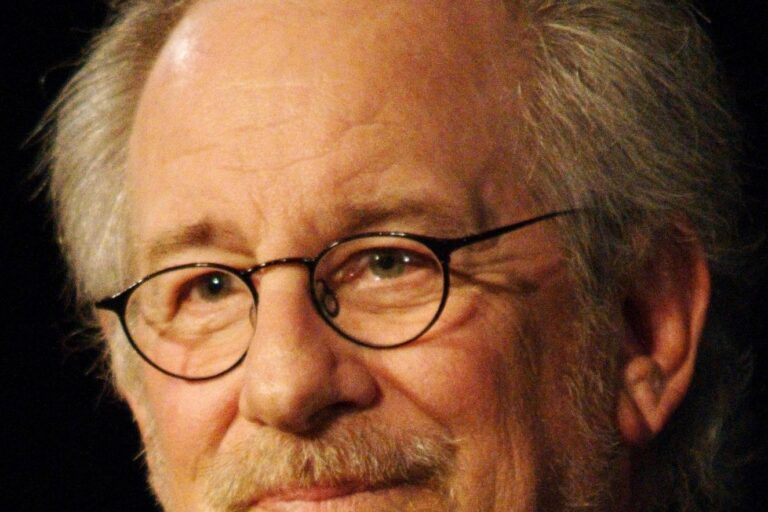
The director behind it
Nolan, born in London on 30 July 1970, studied English literature at University College London, where he ran the film society and screened 35mm features to fund 16mm shorts. His debut, Following, came out in 1998. It was made for around £3,000, shot on weekends over a year, with each scene rehearsed so the first or second take could be used. Memento (2000) brought international recognition, and Insomnia (2002) moved him into studio work.
The Dark Knight trilogy (2005 to 2012) made him a high-profile director, with The Prestige, Inception, Interstellar and Dunkirk following. After Tenet in 2020, he parted ways with longtime distributor Warner Bros. over its streaming release strategy and signed with Universal for Oppenheimer (2023) and The Odyssey. Oppenheimer won him the Oscars for Best Director and Best Picture.
His career tally includes two Academy Awards, a Golden Globe and two BAFTAs, and his films have earned more than $8 billion worldwide. He was appointed a CBE in 2019 and knighted in 2024. He co-writes with his brother Jonathan and runs Syncopy with his wife, Emma Thomas. Three of his films are in the US National Film Registry, and he has been president of the Directors Guild of America since 2025.
The AI counterpoint
The Odyssey’s release week drew an unexpected rival. On July 22, 2026, Elon Musk announced that xAI’s Grok Imagine would produce a full-length “historically accurate” AI-generated Odyssey by the end of the year, a claim historians were quick to mock for treating a mythological poem as history. The clip released with it ran about three minutes and showed Odysseus and Calypso.
An indie studio, Fountain O, actually shipped something: Odysseus: The Fall, a 135-minute fully AI-generated feature made for roughly $50,000, mostly spent on Kling AI compute credits. Humans wrote the script. Critics noted visible artifacts in the character animation and uneven quality between scenes.
Sources
- Christopher Nolan – Wikipedia
- The Odyssey vs AI: What Nolan's Practical Epic Reveals About AI 3D Creation