
MONTREAL, July 21 — IMAX began as an ambitious technical gamble in a Montreal Hungarian restaurant and has become the dominant large-format cinema system, commanding premium ticket prices and driving box-office revenues for epic films. The company, founded in September 1967 by Graeme Ferguson, Roman Kroitor, Robert Kerr, and William C. Shaw, originally operated under the name Multiscreen Corporation — a nod to the founders’ initial concept of multiple small screens.
But as co-founder Ferguson explained, the name Multivision proved too generic to trademark. Over lunch at a Hungarian restaurant in Montreal, the name IMAX was coined, derived from “the maximum image.”
Under the Hood: The 15/70 Format
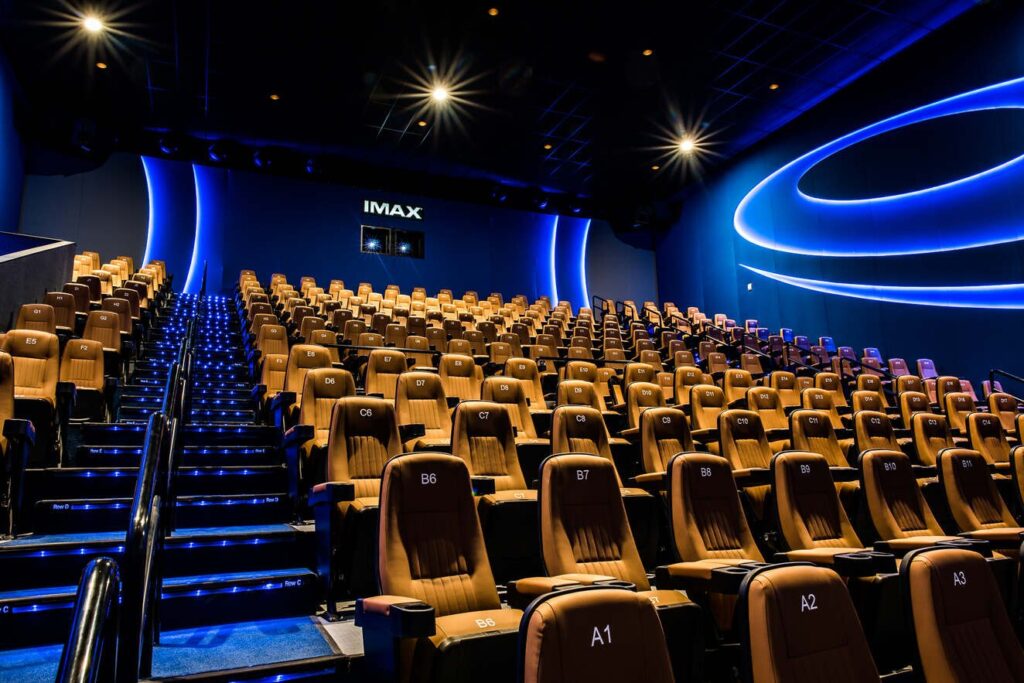
The technical reality of IMAX is a system of proprietary cameras, film formats, projectors, and purpose-built theatres distinguished by steep stadium seating and very large screens with a tall aspect ratio of roughly 1.43:1 — though many films shot with IMAX cameras are later shown in a wider format. The largest IMAX format, Grand Theater or GT, can display 1.43:1 content on a screen large enough to fill almost all of the audience’s field of vision. Those screens measure 18 by 24 metres (59 by 79 feet).
Unlike most conventional film projectors, the IMAX 15/70 film format runs the film horizontally, so the image width can exceed the width of the film stock. Each frame uses fifteen perforations, rather than the five used in conventional 70 mm vertical projection.
That required a solution to the mechanical challenge of intermittent movement. That solution came from Peter Ronald Wright Jones, a machine-shop worker from Brisbane, Australia, who invented a novel “Rolling Loop” film-transport technology. William C.
Shaw designed and built the projector system based on Jones’s invention. A key patent for the single-projector, single-camera system was filed on January 16, 1970 — still under the original name Multiscreen.
Evolving the Format
As ever with high-end cinema hardware, the GT system came with substantial construction and maintenance costs, which limited many IMAX theatres to short documentaries originally. To expand availability, IMAX introduced the SR system in 1998, with slightly smaller screens than GT but still in purpose-built auditoriums maintaining the 1.43:1 aspect ratio. Then came the MPX system in 2004, designed to retrofit existing multiplex auditoriums with wider screens — a compromise that sacrificed much of the GT experience quality.
The shift to digital arrived with IMAX Digital 2K in 2008, followed by IMAX with Laser 4K in 2014. Both are purely digital formats and suitable for retrofitting existing theatres without the architectural demands of a purpose-built GT venue.
That move turned IMAX from an exotic destination attraction into a mainstream premium product. Today IMAX is a major driver of box-office revenues for epic films, its immersive large-screen experience commanding premium ticket prices. The company that began with a name invented over lunch in Montreal now fills auditoriums worldwide — but the technical lineage from that 1970 Rolling Loop patent is still visible under the hood.
Sources
{“@context”: “https://schema.org”, “@type”: “NewsArticle”, “headline”: “IMAX Technology: How Giant Screens and Proprietary Formats Drive”, “description”: “MONTREAL, July 21 — IMAX began as an ambitious technical gamble in a Montreal Hungarian restaurant and has become the dominant large-format cinema system, commanding…”, “datePublished”: “2026-07-21T09:30:00+00:00”, “author”: {“@type”: “Person”, “name”: “Sebastian Smith”}, “publisher”: {“@type”: “Organization”, “name”: “InfoPulse Today”, “url”: “https://newsfeed.infopulsetoday.com/”}, “citation”: [{“@type”: “CreativeWork”, “url”: “https://en.wikipedia.org/wiki/IMAX”}]}




