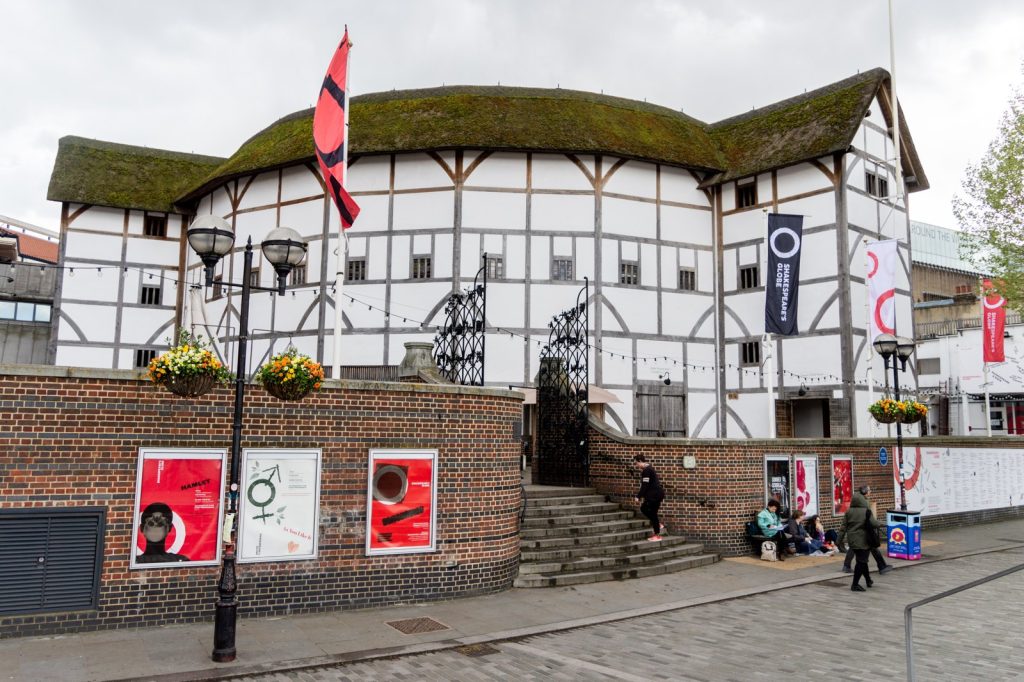
At the site of the Rose playhouse in Southwark, archaeologists dug up sherds from at least 162 ceramic money boxes: 378 fragments in all. Only food and drink vessels turned up in greater numbers. Small clay pots with a slit in the lid were, it seems, a fixture of Shakespeare-era theatre.
Jacqui Pearce of the Museum of London Archaeology (MOLA) laid out the London evidence in the journal Ceramics in America. Her tally is large. The museum’s own collection holds 83 ceramic money boxes from the medieval period through the nineteenth century. MOLA’s database goes further, recording sherds from at least 556 boxes found on 142 sites, nearly all in the City of London or in Southwark, across the Thames.
A cheap pot with a slit
The earliest London examples were made at Kingston upon Thames. They were small and enclosed, with a domed or pointed top like a bishop’s miter and a narrow vertical slit for coins. Tree-ring dating of finds from the Thames waterfront places them at the start of the fourteenth century.
By the sixteenth and seventeenth centuries the form had changed. A knob sat above a narrow neck, the base was flat, and the top half wore a copper-stained green glaze. Most came from the Surrey-Hampshire border potteries. That ware accounts for 84 percent of the boxes MOLA has excavated.
The finds cluster between 1550 and 1630 and peak around 1580. After the 1640s they drop away sharply. The archaeologist Ivor Noël Hume has suggested Puritan rule under the Commonwealth may have cracked down on apprentices’ Christmas boxes.
Why the playhouses?
The biggest hauls come from two playhouses. At The Theatre in Shoreditch, opened in 1576 and dismantled in 1598 so its timbers could be reused for the Globe, MOLA recovered sherds from at least twenty-four boxes. Smithsonian Magazine noted that the early dig there also yielded nutshells and a mug bearing a bearded man’s face. The Rose boxes all came from inside the playhouse and date from the 1580s to the 1630s. None have been found at the Globe site, though Pearce points out that the excavation area there was much smaller and access was limited.
One theory says “gatherers” or “collectors” stationed at entrances took patrons’ coins in the boxes, then locked the proceeds away in a “Commone boxe.” The pots were cheap and easy to replace, since they had to be broken to get the money out. Pearce notes the problems, though. A fragile pot would be a poor way to take coins from a jostling crowd, and as Noël Hume observed, it “positively invites deception.” A second idea has refreshment sellers using them, but the same objection applies.
Some boxes carry a tiny pinhole stabbed through the wall, usually just below the knob and opposite the slit. Pearce found eleven more in the museum’s reserve collection, bringing the total there to seventeen, or 40 percent of the Border Ware examples.
The Theatre site is now home to a development called the Box Office, which Smithsonian reported would let visitors see the remains in place.
Sources
- Money Boxes: The London Evidence – Jacqui Pearce, Ceramics in America 2013 (The Chipstone Foundation)
- Remains of One of the First Theaters to Perform Shakespeare's Plays Will Open to the Public After 400 Years – Smithsonian Magazine