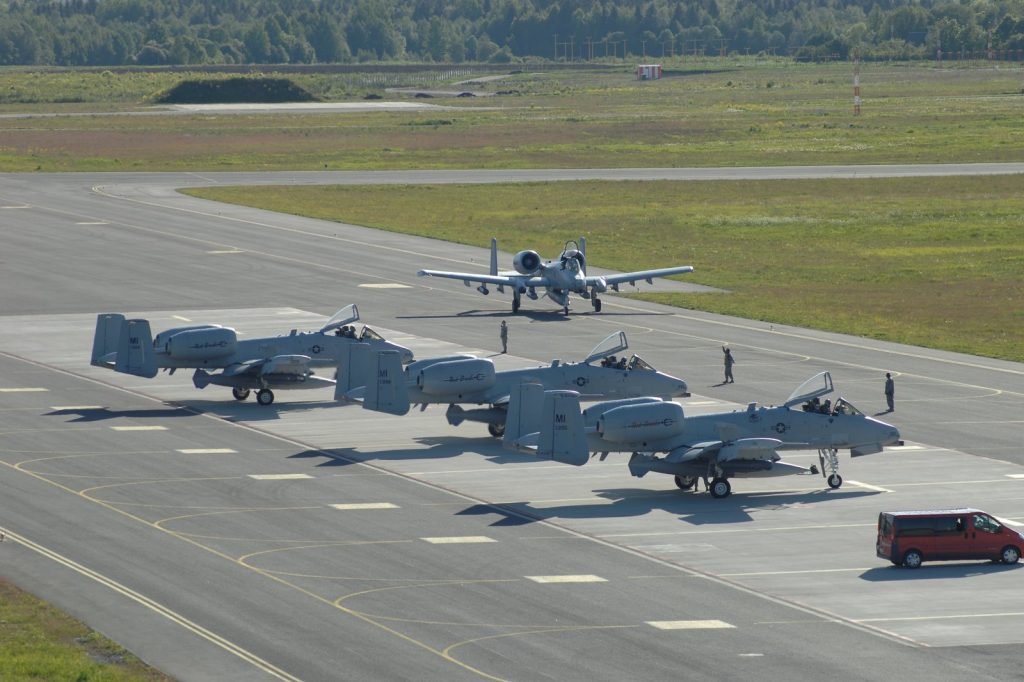
The United States has quietly withdrawn the majority of its troops stationed in Estonia, a move that ends a decade-long permanent deployment and sets a definitive end date for any large-scale American military presence in the Baltic nation. The decision affects roughly 1,000 U.S. service members who have been based in Estonia as part of NATO’s enhanced forward presence under Operation Atlantic Resolve, a mission launched in 2014 in response to Russian aggression in Ukraine.
After 2027, no permanent bases or large-scale deployments are planned, though a small rotational force will continue to conduct training exercises until that deadline. The Estonian government has expressed concern about the timing and scale of the drawdown, pointing to ongoing Russian military activities in the Baltic region.
A Pivot That Reshapes the Baltic Security Landscape
The drawdown reflects a broader strategic reorientation outlined in the 2022 National Defense Strategy, which prioritizes the Indo-Pacific theater over Europe. For Estonia, a NATO member since 2004 that shares a 294-kilometer border with Russia, the reduced American footprint has become a sensitive issue. The U.S. commitment to NATO’s eastern flank is shifting from a stationed, permanent presence to a periodic, rotational one.
The nature of the American guarantee is changing—from a continuous military posture to a scheduled, temporary engagement. Officials in Tallinn have noted that Russian military activities in the region have not paused and that the proximity of the Russian border remains unchanged.
The Estonian government has voiced concerns about the timing of the withdrawal, coming at a moment when Baltic security dynamics remain under strain.
Estonia’s Historical Struggle for Sovereignty and Security
The Estonian Defence Forces trace their institutional roots to the nation’s struggle for survival during the Estonian War of Independence, which followed the collapse of German occupation at the end of World War I. In late 1918, Soviet Russian forces invaded the newly declared republic, pushing small and lightly armed Estonian units to within a short distance of Tallinn. A British naval squadron delivered critical arms, and international volunteers reinforced the fledgling force as it regrouped for a counteroffensive.
By early 1919, the Estonian army, supported by naval and air assistance, drove Soviet troops back across the border. The conflict ended in February 1920 with the Tartu Peace Treaty, restoring Estonian sovereignty for two decades until the Molotov–Ribbentrop Pact placed the country under Soviet control in 1939.
Estonia regained its independence in 1991 with the dissolution of the Soviet Union. In the years that followed, the country rebuilt its armed forces from remnants of the Soviet-era garrison to a small but professional defence structure. Membership in NATO in 2004 anchored Estonia’s security within the alliance’s collective defence framework, while the 2008 Russian invasion of Georgia underscored the need for a credible national deterrent. The Estonian Defence Forces consist of the Land Forces, Navy, Air Force, and the Estonian Defence League, a voluntary paramilitary organisation designed to support territorial defence and crisis response.
The EDF is a standing military organisation tasked with defending the state’s independence, sovereignty, and constitutional order, structured to operate alongside NATO and EU partners to ensure interoperability in collective defence missions and crisis management. The doctrine prioritises territorial integrity, rapid reinforcement, and resilience against hybrid or conventional threats—a posture repeatedly tested by Russia’s 2014 annexation of Crimea and subsequent military build-ups near the Baltic borders.
Calibrating Deterrence in an Era of Rotational Engagement
Today’s shift in the U.S. military presence in Estonia arrives at a moment when the Estonian Defence Forces are expanding their own capabilities and deepening cooperation with European allies. The withdrawal of most American forces by 2027 removes a visible security guarantee but does not alter Estonia’s NATO obligations or its own defence commitments.
For Estonian leaders and citizens, the central question is how to sustain deterrence when the nature of allied support changes from permanent stationing to rotational engagement. The outcome will shape Estonia’s defence planning, alliance relations, and national resilience in the coming decade. The Russian border is not moving. The Russian military activity in the region is not pausing.
The American focus is shifting to the Pacific. Estonia now faces a question that will define its defense posture for the next decade: how to fill the gap left by a departing superpower.
The answer is not yet clear, but the trend—smaller, temporary, and conditional—is already in motion.