
SOUTHAMPTON, June 5 — Researchers at the University of Cambridge and their spinout DIOSynVax have completed the first human trial of a vaccine whose active ingredient was designed entirely by artificial intelligence, reporting that it is safe and generates immune responses against an entire family of coronaviruses. The vaccine uses an AI-designed super-antigen, which was created by machine-learning algorithms analyzing genetic data from every known Sarbeco coronavirus, including SARS-CoV-2, the original SARS virus, and bat coronaviruses with pandemic potential.
This approach is different from traditional vaccines that target individual variants, as it combines the shared molecular features of these coronaviruses into a single immune-training molecule.
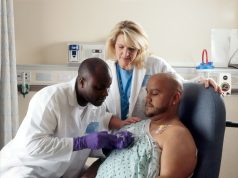
It was a significant moment when the Phase 1 trial enrolled healthy volunteers in Southampton and Cambridge. The trial delivered the vaccine through a needle-free fluid jet rather than a syringe, and participants developed immune responses against SARS-CoV-2, the original SARS virus, and bat viruses flagged as future spillover risks, with no significant side effects reported.
The researchers say the same platform could be adapted for other rapidly mutating viruses such as Ebola and influenza, potentially shifting vaccine development from reacting to outbreaks toward preparing for them in advance.
This breakthrough offers hope for a new approach to vaccine development, one that could help protect against future pandemics. A short, blunt fact: the results were published in the Journal of Infection. As an early-phase trial, the findings still require larger studies to confirm effectiveness.
The trial’s outcome is a promising step forward, and the researchers’ work could have a significant impact on the development of vaccines for rapidly mutating viruses. The potential of this technology is vast, and it will be exciting to see how it develops in the coming months and years.
With the ability to adapt the platform to other viruses, the possibilities for protecting against future outbreaks are significant.
As researchers continue to work on this technology, we can look forward to potential breakthroughs in the fight against infectious diseases.
Consult your doctor for medical advice.