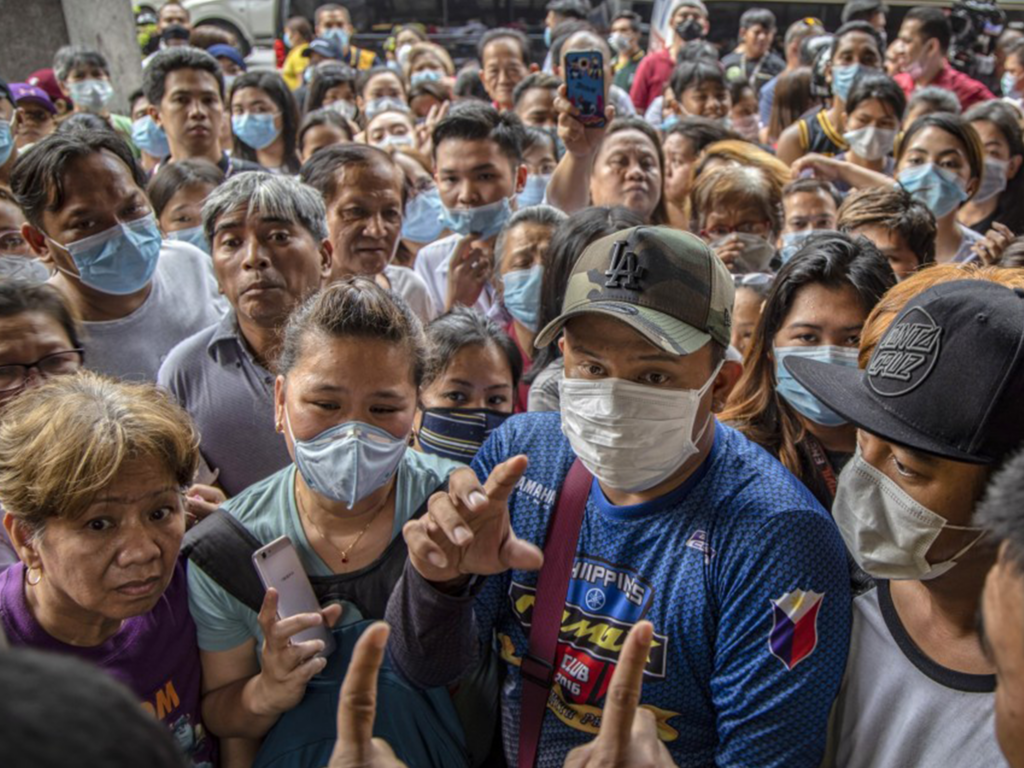
Philippine President Rodrigo Duterte declared a “state of public health emergency” on Monday as the Coronavirus Disease 2019 (COVID-19) started spreading in the country’s capital city Manila and its neighboring towns. “The outbreak… constitutes an emergency that threatens national security, which requires a whole-of-government response,” the President said in a proclamation. During his announcement on March 9, the number of infected people was only 20 but as of Wednesday morning, 13 additional cases were confirmed by health authorities, bringing the total to 33.
The health emergency enables the release of financial assistance to local governments for them to efficiently deal with the widening coronavirus outbreak. It also eases the rules in procuring necessary health resources such as testing kits, masks and protective gears.
With this, the Department of Trade and Industry immediately implemented price control measures on protective masks. Meanwhile, several events, from conferences to sporting activities to festivals, have been canceled in efforts to contain the virus spread. Classes in all levels in Metro Manila were also suspended from March 10 to 14.
Other cities and towns have likewise suspended classes this week to accommodate the disinfection of classrooms. Lawmakers are currently urging the Education department to postpone graduation rites this month to prevent any possible transmission.
The Philippine government said it is also considering lockdown and suspension of work at the municipal, city or provincial level if the situation continues to escalate. The declaration follows a pattern of escalating public‑health measures worldwide as the novel coronavirus spreads beyond its original epicenter. Nations have increasingly turned to emergency powers to mobilize resources, enforce quarantines, and limit large gatherings in an effort to flatten transmission curves.
Such steps are intended to buy time for health authorities to expand testing capacity, secure personal protective equipment, and prepare hospitals for a potential surge in patients. In the Philippines, the Department of Health has been coordinating with local government units and international partners to trace contacts, isolate confirmed cases, and disseminate public‑health guidance. The health emergency framework allows the central government to allocate additional funding to regional and municipal agencies, streamline procurement processes, and temporarily relax regulatory requirements that could otherwise delay the acquisition of critical medical supplies.
Schools and mass‑attendance events have been focal points for containment strategies in previous outbreaks, given their potential to amplify person‑to‑person transmission. By suspending classes and canceling conferences, sporting fixtures, and festivals, authorities aim to reduce crowd density and limit opportunities for the virus to spread across communities, especially in densely populated urban areas.
Economists and public‑policy analysts note that while such measures can mitigate health risks, they also pose challenges for economic activity and social services. The government’s consideration of broader lockdowns reflects a balancing act between protecting public health and maintaining essential functions, a dilemma faced by many countries confronting the pandemic.