King Khalid International Airport in Riyadh is shut. A Houthi attack on it last Saturday killed 13 people and injured more than 300, according to the TIME account of the week, and a projectile hit the same airport again on Sunday, killing one more, Saudi Arabia’s civil aviation authority confirmed. Etihad Airways, Qatar Airways and Philippine Airlines are among the carriers that have suspended flights to the capital.
The week before, an attack on Abha International Airport killed two people and wounded 28.
The latest escalation
On Wednesday the Houthis vowed to keep going, hours after striking the headquarters of the oil giant Saudi Aramco. Military spokesman Yahya Saree said operations “toward Saudi depths” would continue in the coming days and called the targets legitimate. Saudi-led forces said they had intercepted a ballistic missile fired at Riyadh. The Tuesday night attack on Aramco’s executive offices in Dhahran caused a limited fire, Saudi Arabia’s Energy Ministry said. No one was hurt there, though falling debris from intercepted missiles and drones injured four people in Riyadh.
Saudi aircraft hit an oil depot on the outskirts of Sanaa that same Tuesday. On Thursday the European Union and the Gulf Cooperation Council postponed a joint summit planned for Saudi Arabia the following week, citing the Houthis’ attempts to target civilian infrastructure.
The US embassy in Riyadh has warned Americans of possible flight cancellations and airspace closures, and U.S. government employees need special authorization to use any Saudi airport. President Donald Trump said the Houthis “are behaving very badly.” He suggested over the weekend that Washington might join Saudi strikes. A senior US official told TIME only that the United States is in continuous dialogue with Riyadh and the Yemeni government.
Saudi Arabia is the world’s top buyer of American weapons, according to the Stockholm International Peace Research Institute, yet it is struggling to stop the attacks. Officials are investigating how their defenses failed. Saudi analyst Ali Shihabi argued that expecting a country of that size to intercept every missile is “simply unrealistic”. The border with Yemen runs for more than 800 miles.
Who the Houthis are
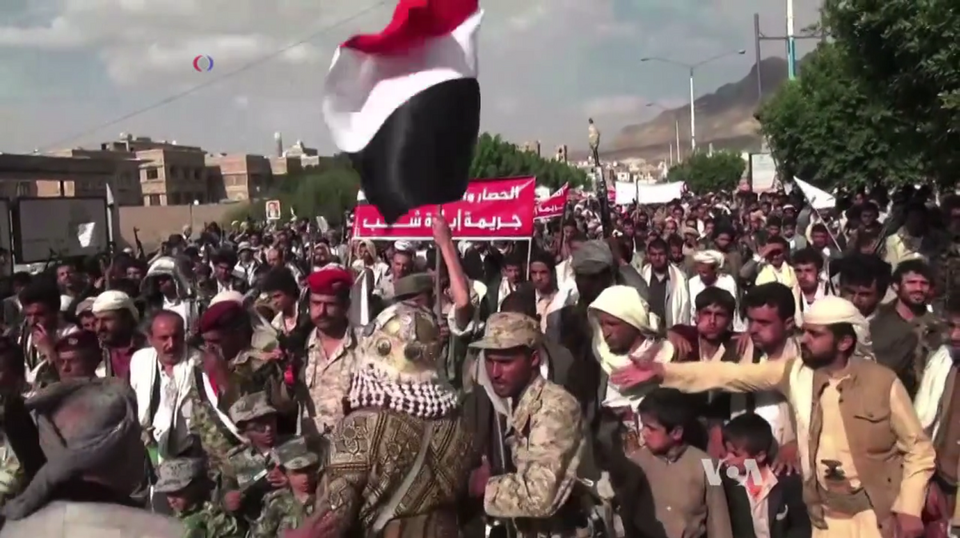
The Houthis, formally Ansar Allah, are a Zaydi revivalist and Shia Islamist political and armed movement that emerged from Yemen’s north in the 1990s. Zaydis make up around 35 percent of Yemen’s population, TIME reported. The movement grew out of the Believing Youth, a group founded in 1992 in Saada, and took its popular name from Hussein al-Houthi. He launched an insurgency against President Ali Abdullah Saleh after a failed attempt to arrest him and was killed by Yemeni forces in 2004. His brother, Abdul-Malik al-Houthi, has mostly led the movement since.
The Houthis seized Sanaa in 2014 and the presidential palace in January 2015. A Saudi-led coalition intervened in March of that year, and the civil war that followed has lasted more than a decade. In January 2024 the United States designated the group a Specially Designated Global Terrorist entity.
Why Saudi airports, and why now
A UN-brokered truce from April 2022 largely held for more than four years before collapsing in July. The Houthis said Saudi Arabia had struck Sanaa Airport, targeting a delegation returning from Iran, and answered with ballistic missiles. They went on to hit Aramco refineries and, in September, escalated further and added Saudi airports to the list. They also claimed Perim Island in the Bab el-Mandeb Strait; Saudi-backed forces retook key areas around the strait in early October.
Airports are familiar ground. Before the 2022 truce, such attacks were considered a Houthi signature. The group struck Abha International Airport in June 2019, injuring at least 26 people, and Human Rights Watch called it a possible war crime.
Analysts see economic pressure as the aim. Yemeni analyst Mahmoud Shehrah of Chatham House said the Houthis want to squeeze Saudi Arabia toward a political settlement. Fawaz Gerges of the London School of Economics said they want the skies and ports open to trade, with money flowing to them. Farea Al-Muslimi of Chatham House noted that the disruption is costly to Crown Prince Mohammed bin Salman, who wants the kingdom seen as a safe harbor.
The Iran link
The Houthis sit within Iran’s “Axis of Resistance”, alongside Hezbollah and Iraqi militias. Al-Muslimi said Iran sped up weapons, training and funding from 2009. Gerges cautioned that the Houthis are one of Tehran’s more independent allies, with interests of their own. With Syria’s Assad gone and Hezbollah weakened, Al-Muslimi said, they have become Iran’s most important regional ally. They entered the Iran war in March with missile fire at southern Israel, and declared a blockade against Saudi Arabia in July. Their reach along the Red Sea coast could give Tehran leverage in its talks with Washington, much as Iran’s hold on the Strait of Hormuz has.
The United Nations says nearly half the population in government-controlled areas faces high levels of acute food insecurity.