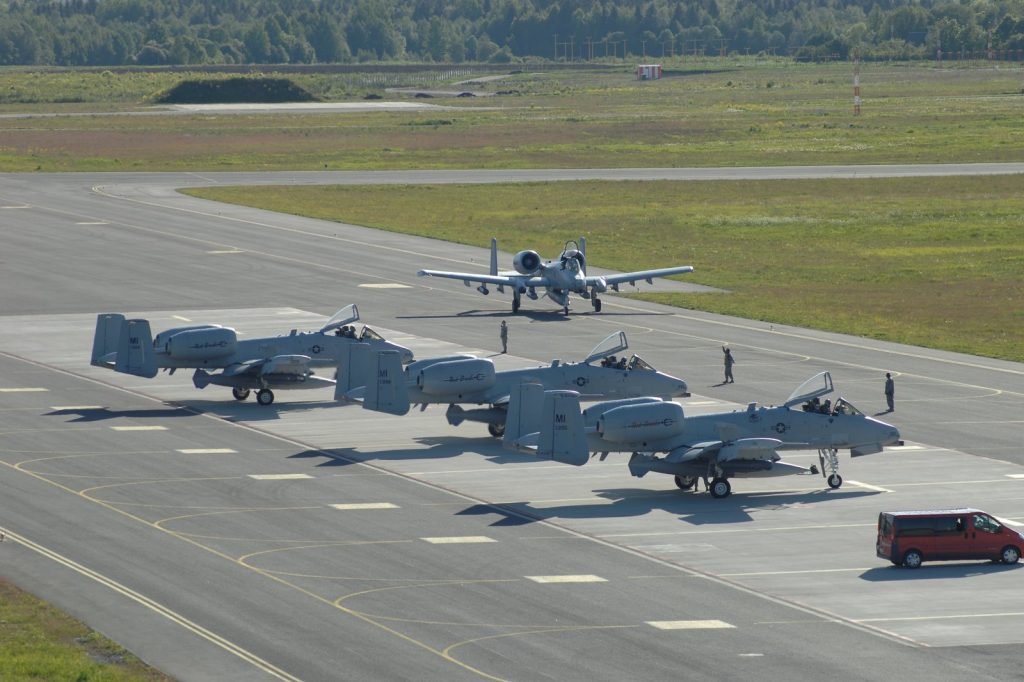
Most American soldiers who were stationed in Estonia have already gone home, according to Militarnyi, a Ukrainian defense outlet with sources close to Baltic and NATO officials. The same reporting says Washington has told Estonian officials it plans no military presence there after 2027.
The Pentagon has not issued a formal statement confirming the 2027 timeline or explaining the reasoning. Estonian defense officials have not commented in detail. Militarnyi’s sourcing suggests the message from Washington was direct and unambiguous.
What the troops were doing there
The U.S. contingent served mainly under NATO’s Enhanced Forward Presence, set up after Russia annexed Crimea in 2014. American forces contributed to rotational battlegroups beside British-led multinational units. Estonia shares a 294-kilometer border with Russia, and Baltic governments have long treated the American presence as a concrete guarantee, not a symbol.
Estonia’s military built much around it: training schedules, logistics and intelligence-sharing all tied to a continuing U.S. role. Without it, Estonia would need other NATO partners to fill the space, or faster spending of its own. It already spends heavily. Defense took 3.4 percent of GDP in 2025, well above NATO’s two-percent benchmark.
Europe’s share of the load
The British-led battlegroup in Estonia stays for now, and the UK has signaled it will keep backing Baltic security under its bilateral defense agreements with Tallinn. The European Union’s ReArm Europe initiative, launched in 2025, gives member states room to expand their defense industries and standing forces, and Estonia has taken part early. Still, European reassurance carries different weight in Tallinn than American troops would.
Latvia and Lithuania are watching. All three Baltic states share the same exposure: a land border with Russia or Belarus, and the narrow Suwalki Gap linking them to the rest of NATO. A drawdown in Estonia does not automatically change anything elsewhere on the flank, but it alters how every NATO government reads American commitment to Article 5.
Poland, which hosts the largest U.S. military presence in Central Europe, has pressed to have a permanent American presence written into a treaty. Estonia’s case shows why. Rotational and informal arrangements can end without any formal notice to the host.
The timing is awkward, with Russia’s war on Ukraine in its fifth year since the full-scale invasion of February 2022. If nothing is planned beyond 2027, Estonian and NATO planners have roughly 18 months to close a gap that American rotations helped cover for nearly a decade.