WASHINGTON, September 18 — The Federal Reserve raised its benchmark interest rate and signaled that further increases may be on the way, a combination that sent US stocks lower. The bottom line: the hike itself was expected. The hint of more to come was not.
Investors read the pairing as a more hawkish stance than a rate increase alone, and equities slid in response.
What the Fed did
The Federal Open Market Committee, the Fed’s policy-setting arm, sets the target range for the federal funds rate — the overnight rate at which banks lend reserves to one another. That rate is the primary lever of US monetary policy, and it feeds through to borrowing costs on mortgages, credit cards, auto loans and business credit. The FOMC meets roughly eight times a year.
Its post-meeting statement and the Fed chair’s press conference that follows are the two moments markets watch most closely, because the language and the answers are parsed for hints about the pace and destination of future moves.
Why stocks fell
When the Fed raises the funds rate, short-term borrowing gets more expensive. That tends to slow spending and investment and, over time, cool inflation. The same tightening raises the discount rate investors apply to future corporate earnings — which is why rate hikes often weigh on stock prices, particularly growth and technology shares whose valuations depend on profits expected far in the future.
Guidance pointing to additional increases implies policy will stay tight or tighten further rather than pause. That is the dynamic behind the decline.
The mandate and the mechanics
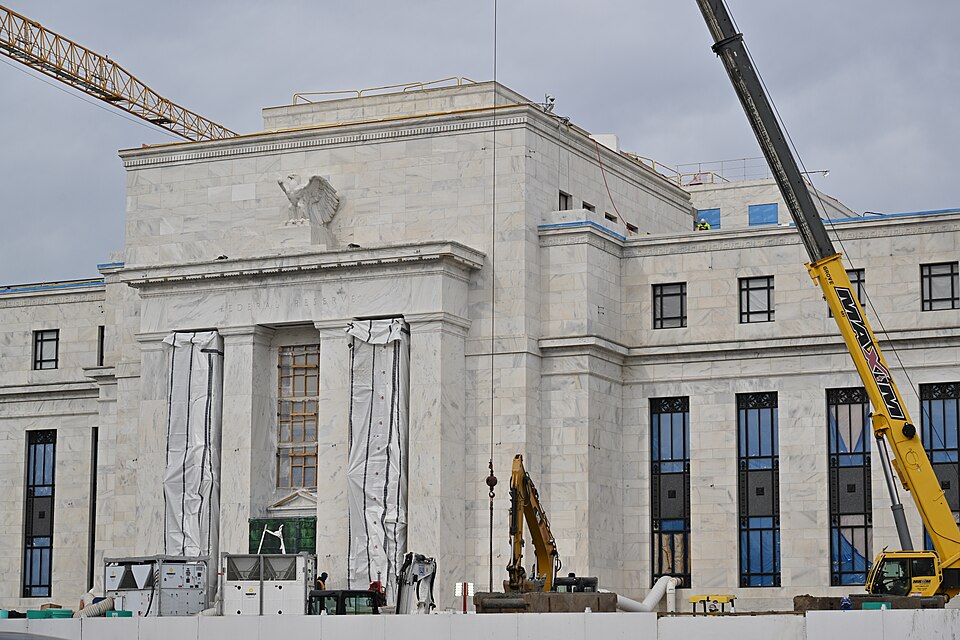
Congress set the Fed’s dual mandate: maximum employment and price stability. Rate policy is the tool it uses to pursue both. The Fed is the central bank of the United States, created by the Federal Reserve Act of 1913.
Its Board of Governors sits in Washington, alongside twelve regional Reserve Banks. The Fed chair leads the FOMC and serves as the public face of US monetary policy; the chair is nominated by the US president and confirmed by the Senate.
Three terms matter for readers following this cycle. A hawkish stance favors higher rates to fight inflation. A dovish stance favors lower rates to support growth.
The terminal rate is the peak level officials expect the funds rate to reach in a given tightening cycle. Forward guidance is the communication officials use to shape market expectations.
The global reach
The dollar is the world’s dominant reserve and trade currency, so Fed decisions ripple beyond US borders. Higher US rates can strengthen the dollar, tighten global financial conditions, and pressure emerging-market currencies and dollar-denominated debt. What to watch next: the FOMC’s next scheduled meeting, and whether the statement language and the chair’s answers hold the line on further increases or soften it.