Colombia’s president had the podium on Thursday, September 24, and let someone else use it. Abelardo de la Espriella, who took office the month before, had promised on the campaign trail to skip foreign trips and focus on urban crime and violence from illegal armed groups. So Vice President Jose Manuel Restrepo delivered the speech instead, opening with the aftermath of an earthquake that killed at least 289 people.
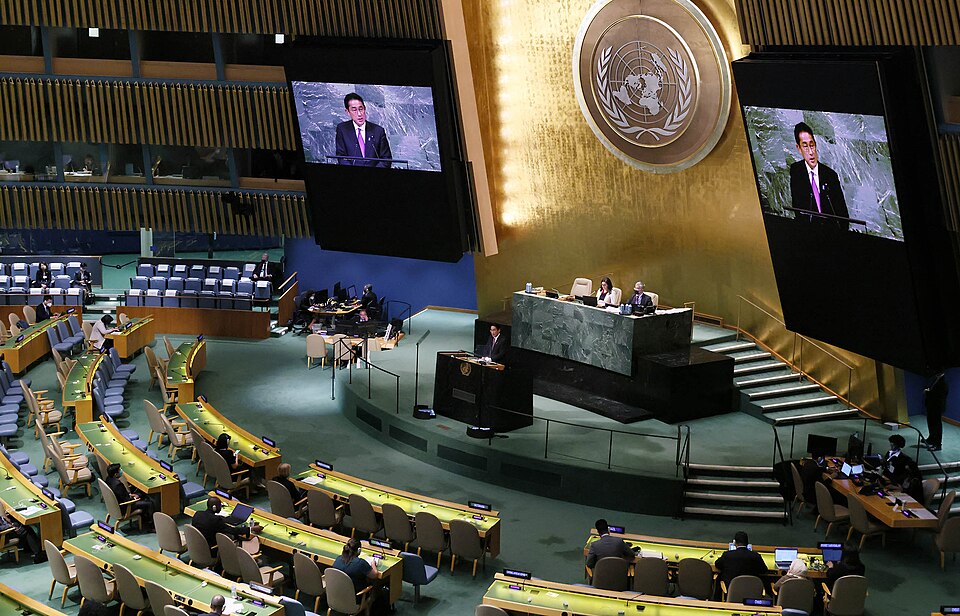
It was day three of the high-level debate at the 81st session of the UN General Assembly, and the day belonged to the smaller moments.
How the session was set up
The session began on September 8, when Khalilur Rahman of Bangladesh took office as president of the Assembly. Al Jazeera reported that the general debate opened on Tuesday, September 22, ran through Saturday, September 26 and resumed on Monday, September 28. Nearly 130 heads of state and government were expected to speak. By tradition Brazil went first, with the United States, as host, usually second.
The theme was “Restoring trust, managing transformation: a United Nations that delivers for all”. Alongside the speeches, the UN scheduled high-level meetings on climate action and a just transition, on the 40th anniversary of the Declaration on the Right to Development, on sea level rise and on pandemic preparedness. Later came sessions on the 25th anniversary of the Durban Declaration against racism and on eliminating nuclear weapons.
Visas were a sore point for the second year running. The US denied entry to Palestinian officials, so Mahmoud Abbas addressed the Assembly by prerecorded video after member states voted to allow it. The UN said the decision violates the Host Country Agreement.
Day three, according to AP
Competing speeches from Benjamin Netanyahu and Abbas drew the most attention on Thursday, The Associated Press reported, even though the Palestinian leader was not in the hall.
Bolivia’s Rodrigo Paz, ten months into his presidency, has lost many of his original ministers and survived a siege of his seat of government lasting almost eight weeks. Contaminated gasoline also damaged more than 10,000 vehicles. At the Assembly he was defiant. Socialism “does not put food on the table”, he said, and he ended with what AP called possibly the quote of the week: “Long live the fatherland, damn it! Long live Bolivia.”
Ghana’s John Dramani Mahama seemed to answer Donald Trump’s Tuesday speech, in which the US president suggested he might “annihilate” Iran. “No human civilization deserves to be annihilated, and certainly not a member of the United Nations,” Mahama said. He also thanked the 123 nations that voted to recognize the crimes of the transatlantic slave trade.
Paraguay’s Santiago Peña told the room: “Paraguay stands, and I say this loud and clear, with Taiwan.” Paraguay is the only South American country to recognize the island, one of just 12 worldwide. Peña said conflict in the region affects the microchips that “drive industry, defense and artificial intelligence.”
A succession race in the background
This was also Antonio Guterres’s last General Assembly. His second term ends on December 31. Al Jazeera counted seven candidates to replace him, four women and three men, after Michelle Bachelet withdrew having won support from only one of the 15 Security Council members in an informal vote. Costa Rica’s Rebeca Grynspan was narrowly ahead, with nine members encouraging her candidacy. Five discouraged it.
There was a lighter note at headquarters, too. With temperatures falling, reporters found the press briefing room freezing. UN deputy spokesperson Farhan Haq said of the chill: “It’s whatever the weather is like outside, and more.”
Sources
- UN General Assembly 2026: When is it, who is speaking and when? | Al Jazeera
- WATCH: Day 3 of the 2026 United Nations General Assembly | PBS News