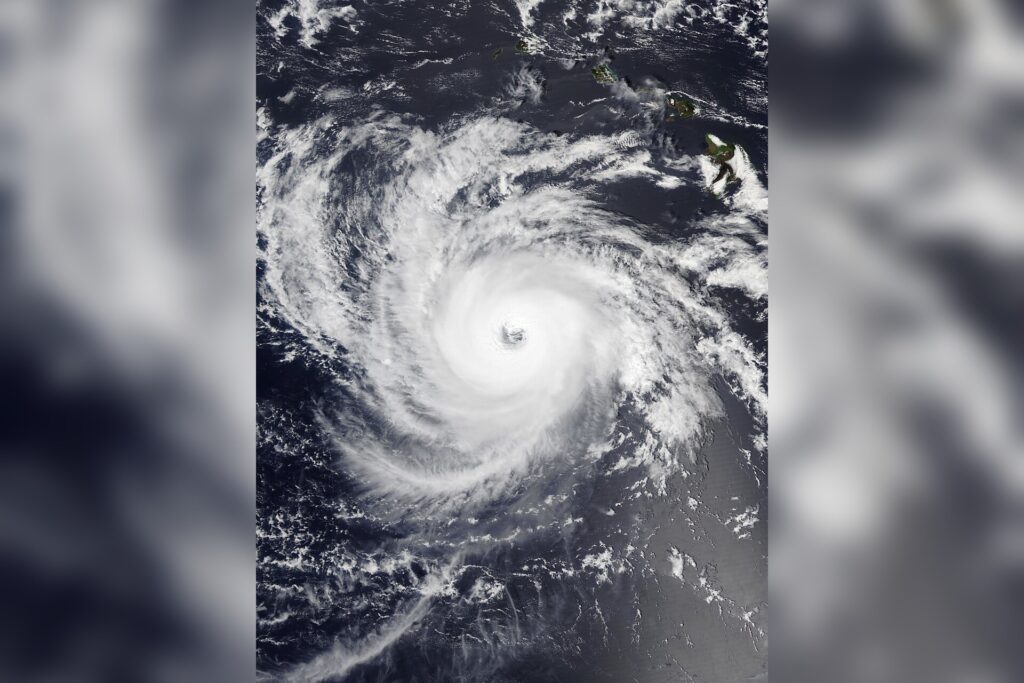
HOUSTON, October 4 Typhoon Nolo, once Hurricane Nolo, is a storm on the move — 395 miles west-southwest of Lisianski Island, its eye still churning over the vast Pacific. The U.S. National Hurricane Center’s final advisory Sunday confirmed its westward path at 17 mph, a slow but steady march across open ocean. John Cangialosi, a senior hurricane specialist at the National Hurricane Center, said the storm remains a powerful force, but its location over open water reduces immediate threats.
“It’s a strong system, but it’s not near any land,” he said, echoing the center’s assessment that Nolo is not forecast to threaten any land through Friday. The storm’s journey has been a rollercoaster.
Nolo first appeared near Hawaii as a hurricane a week ago, weakened to a tropical storm, then regained strength on Friday before crossing the international dateline. That’s when the name changed — from hurricane to typhoon, a shift in nomenclature that reflects the region it now inhabits. At the time of the name change, Nolo had maximum sustained winds of 115 mph, a Category 3 typhoon.
The distinction between hurricanes and typhoons is more than semantic. In the North Atlantic and central and eastern Pacific, storms with winds above 74 mph are called hurricanes.
In the Northwest Pacific, they are typhoons. In the South Pacific and Indian Ocean, they are simply tropical cyclones, regardless of strength. Elsewhere in the Pacific, Hurricane Rachel continues its westward journey, moving away from Mexico.
Though it’s not a direct threat, it’s generating dangerous swells and waves along the coasts of west-central Mexico and the Baja California Peninsula. Forecasters say it’s moving farther out to sea, but the impact on coastal communities is already being felt. With Nolo still far from land, the focus remains on tracking its path.
Forecasters expect it to continue moving west across the Pacific, but the storm’s strength and trajectory will be closely watched. For now, the vast ocean remains its only audience — a storm that, for now, is not a threat to human life, but a reminder of nature’s power in the open sea.