“I thought Tom made me look panicked,” Chesley Sullenberger told a crowd at New York’s Intrepid Sea, Air & Space Museum, with Tom Hanks sitting a few feet away. The panel overlooked the stretch of the Hudson where Sullenberger put down US Airways Flight 1549 in 2009, and it was held the day before “Sully” opened in theaters.
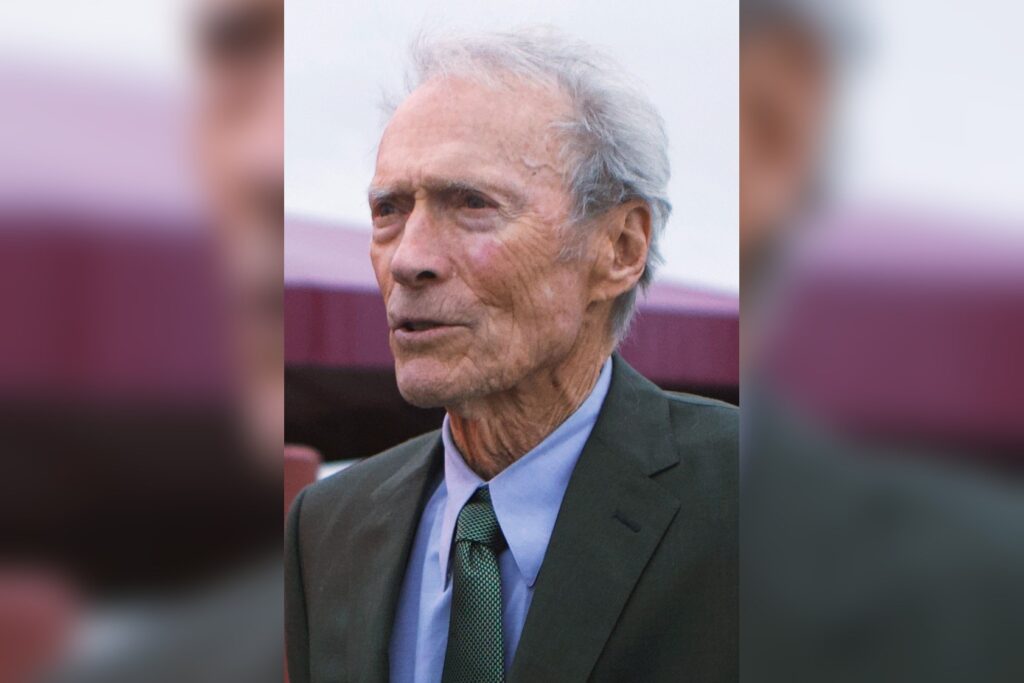
Clint Eastwood directed. It was the first time in more than 30 features that he had recreated a historical event. He chose to shoot in the spot on the Hudson where the plane actually landed, and he cast some of the real first responders who pulled passengers out of the water. The landing itself was another matter. “We had to make some mighty good visual effects to make it look convincing,” Eastwood said.
Getting the cockpit right
Hanks played Sullenberger, with Aaron Eckhart as co-pilot Jeff Skiles. Sullenberger gave extensive notes on the script, and Hanks said it had many inaccuracies until the captain corrected them. “Much of it was about procedure and nomenclature and the process,” Hanks said. Think of it like learning a dance from the person who wrote it: after enough time with Sullenberger, Hanks said, the information “becomes part of the [natural] instinct.”
Eckhart, who holds a pilot’s license himself, said that playing a real man carried extra pressure. “They’re going to be defined by this picture for the rest of their lives, so you take it very seriously.” Eastwood said that on meeting the real Skiles, he thought the casting was spot on.
Eastwood had his own link to the story. He had survived a water landing in an airplane decades earlier, which he said helped him in dealing with the passengers.
From book to screen
Todd Komarnicki wrote the screenplay, drawing on Sullenberger’s 2009 autobiography “Highest Duty,” written with Skiles. Komarnicki said the river landing was never the hard part, since everyone knows that story. The challenge was the investigation afterward, with a man who seemed to be coming apart in private while the world made him a hero.
That investigation is where the film drew fire. It portrays the National Transportation Safety Board as “prosecutorial and closed-minded,” a fictionalized version that stirred controversy. In the film, the board’s simulations suggest the plane could have reached LaGuardia or Teterboro, and Sullenberger argues that they ignore human factors such as surprise and decision time. The film ends with the board confirming that the bird strike had badly damaged the left engine and that he acted correctly.
Filming began in New York on September 28, 2015, and moved to Atlanta that October. Most of the budget was spent in Los Angeles, where the crash and water evacuation scenes were shot at Warner Bros. Studios and Universal Studios Hollywood. It was shot almost entirely on Arri Alexa IMAX cameras.
Warner Bros. released it on September 9, 2016, after a premiere at the Telluride Film Festival on September 2. Reviews were generally positive. It earned $240.8 million worldwide on a $60 million budget, opened to $35 million in the United States and Canada, and received an Oscar nomination for Best Sound Editing.
Sources
- Sully (film) – Wikipedia
- ‘Sully’ Director Clint Eastwood and Tom Hanks on the Challenge of Recreating the ‘Miracle on the Hudson’
- Sully (film) – Wikipedia
- Sully Sullenberger