Picture Erika Mann, grief-stricken in a hotel room in postwar Germany, throwing open the window to scream at the noisy crowd on the street below. It is one of the quietest, shortest scenes in Paweł Pawlikowski’s Fatherland, and it exists because the director cut a longer one.
The 82-minute film opens Friday in select U.S. theaters through Mubi. It is the third straight Pawlikowski picture to run 90 minutes or less, after Ida and Cold War. All three are in black and white, in the boxy academy ratio. “It feels a bit controversial what I’m doing,” the 69-year-old Polish director says, laughing. “I’m quite aware that it’s provocative to be so stripped down.”
Frankfurt to Weimar
Hanns Zischler plays the Nobel Prize-winning novelist Thomas Mann, and Sandra Hüller is his daughter Erika. In the aftermath of the Second World War, they travel through a ruined country, between U.S.-controlled Frankfurt and Soviet-controlled Weimar. Mann, who fled to America to escape the Nazis, is courted by both East and West. Former Nazis are drifting back into public life and pushing their own version of Germany.
“Stalin or Mickey Mouse” is how one character puts the choice facing the Manns. Pawlikowski hears echoes of today’s political divisions in that line. The film is fiction built on fact: Mann actually made the trip with his wife, not his daughter, visited more places and stayed longer. Pawlikowski squeezed it into two cities and five days. He says the story is about what art is worth beside political power. “Art is good for you, but it’s not going to solve any problems,” he says.
Cutting to the bone
Pawlikowski made Ida (2013), which won the Oscar for best international film, and Cold War (2018), which brought him the best director prize at Cannes and an Oscar nomination for best director. Fatherland won him best director at Cannes in May. He co-wrote it with Hendrik Handloegten, and Łukasz Żal shot the black-and-white images, as he did on the earlier two. This is Pawlikowski’s first film set in Germany.
His method is subtraction. “You try to distill it, distill it, distill it,” he says. What you notice missing afterward is the connective tissue, the moments that carry a character into or out of a scene. “You don’t need the scenes that get you from A to B,” he says. “Just have strong scenes side by side.”
He admits to trimming the final cut by a few minutes just to needle the selectors at Cannes. “I do feel a certain thrill that I’m going against the grain and getting away with it,” he says. His contract, he adds, said the film had to run at least 90 minutes.
The window scene shows the habit in action. Pawlikowski first wrote a big emotional moment in which Erika learns her brother Klaus has died and talks to an Associated Press reporter named Betty. He then reshot it with Erika alone, because he decided she should be left with her memory of Klaus. He had kept two hotel rooms dressed in case he wanted to redo scenes.
Hüller, who also appears this year in Project Hail Mary, Digger and Rose, says the precision of the frame rewards an inner life that cannot be seen from outside. Some lines she loved were cut. Pawlikowski’s reply: a clever line does not have to stay just because it is clever.
The film is due in UK cinemas on October 23. “I feel like a total rebel in today’s era of epic runtimes,” he says.
Sources
- Paweł Pawlikowski, master of the 90-minute movie, returns with ‘Fatherland’
- Paweł Pawlikowski, master of the 90-minute movie, returns with 'Fatherland'
- Paweł Pawlikowski on Fatherland and the Beauty of Brevity
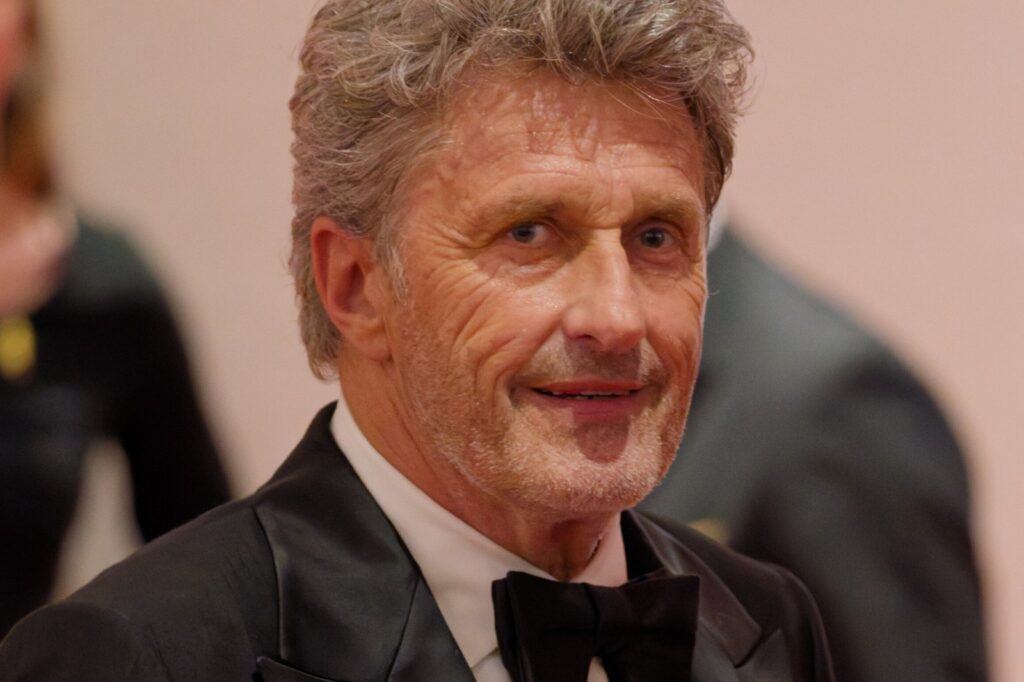
Photo: Kevin Payravi (CC BY-SA 4.0)