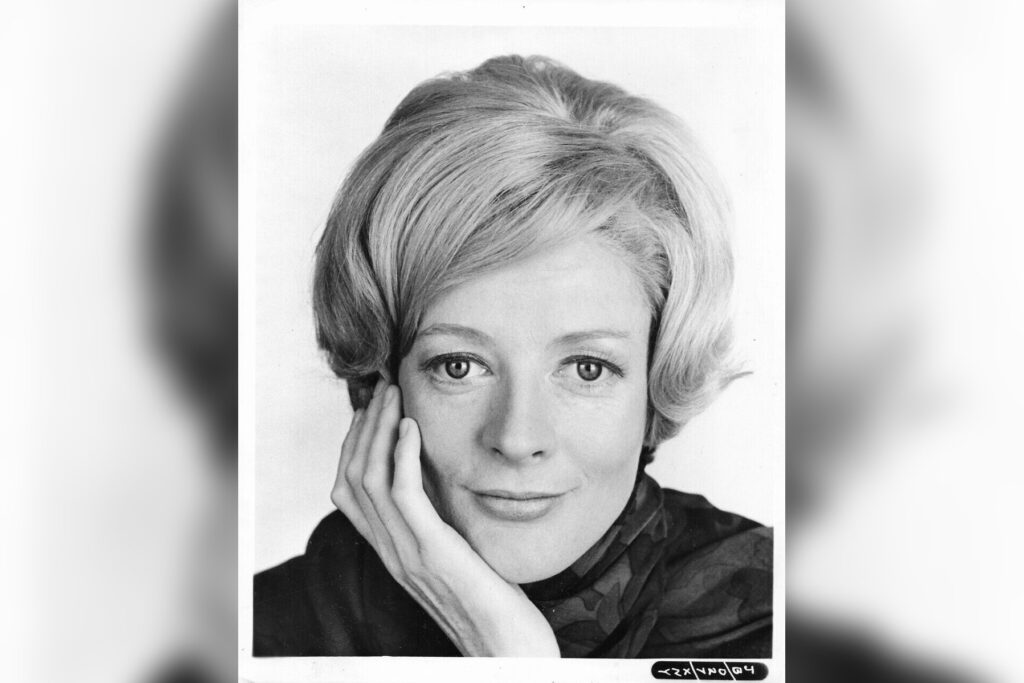
Maggie Smith died on Friday, 27 September 2024, in a London hospital. She was 89. Her sons, Chris Larkin and Toby Stephens, confirmed her death in a statement issued through publicist Clair Dobbs. No cause of death was given.
Over a career of about 60 years, Smith was open about several health problems. She had won Oscars, Emmys and a Tony, and was known for Downton Abbey, the Harry Potter films and The Prime of Miss Jean Brodie.
Graves’ disease
In 1988 she had just started her run in Lettice and Lovage when she was diagnosed with Graves’ disease, an autoimmune disorder that affects the thyroid and is the most common cause of an overactive thyroid. She was 54. It changed the shape of her eyes. Medication and determination got her through the yearlong contract, and she missed only one performance, The New York Times reported in 1990. The swelling and protrusion around her eyes were not improving.
The diagnosis came right after a fall from a bicycle in the British Virgin Islands in November 1988, in which she broke an arm and fractured a shoulder. After the play closed, she spent a year out of sight. She had radiation, surgery on her eyes and swimming to rehabilitate the arm.
“It’s been kind of like a fog of despair, really,” she told the Times. “It was ghastly having a broken arm; ghastly with the play, letting everybody down; and on top of that, I looked absolutely frightening, and didn’t know which way to turn.”
Breast cancer
She was filming Harry Potter and the Half-Blood Prince when she was diagnosed with breast cancer. She had felt a lump and wasn’t worried at first. “Years ago I felt a lump and it was benign,” she told The Times of London. “I assumed this would be too.”
Treatment lasted two years and included chemotherapy and radiation. Smith called it “hideous.” “You feel horribly sick,” she said. “I was holding on to railings, thinking, ‘I can’t do this.’” On set as Professor McGonagall she wore a wig. “I was hairless. I had no problem getting the wig on. I was like a boiled egg,” she said. The BBC reported she was declared cancer free after the two years.
The illness shook her confidence about work. “I’m frightened to work in theatre now,” she said, adding that film work is more tiring. She felt the age at which it struck mattered: “It knocks you sideways. It takes you longer to recover, you are not so resilient.”
Later years
In 2016 she missed the Golden Globes, where she was nominated for The Lady in the Van, while recovering from hip replacement surgery, the Los Angeles Times reported. That year she also told The Telegraph’s interviewer she was blind in one eye: “Forgive me for looking at you like this.”
Her sons said she leaves two sons and five grandchildren, “devastated by the loss of their extraordinary mother and grandmother.”