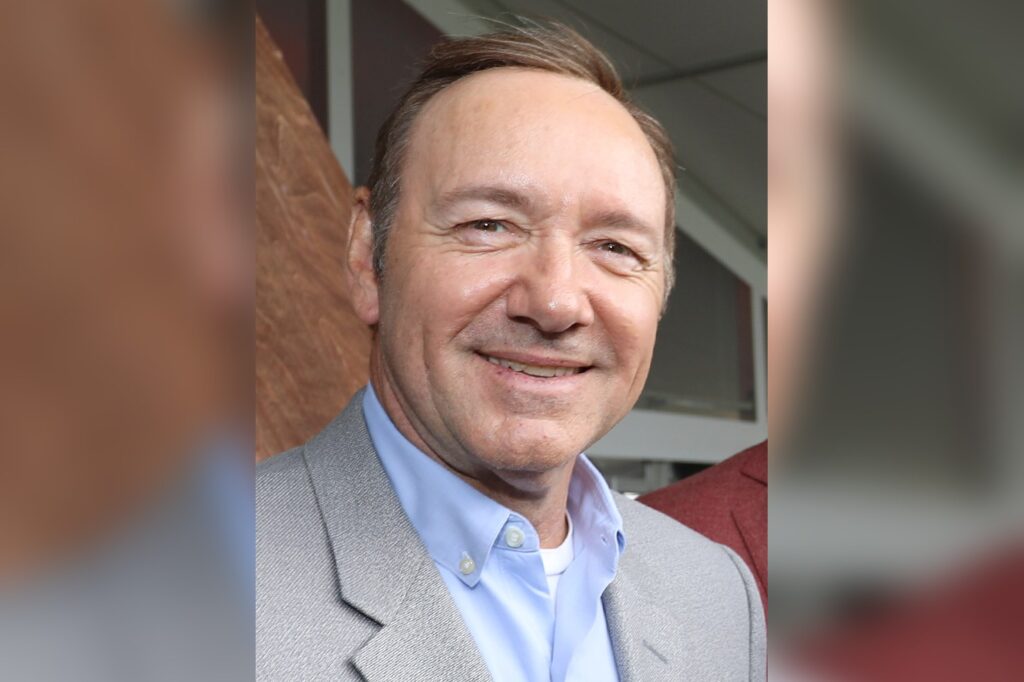
The legal victories Kevin Spacey touts on podcasts and talk shows did not come cheap. They followed years of preparation, testimony, and public dissection of his private life. The two-time Oscar winner sat down with Bill Maher on the “Club Random” podcast Monday.
He called the cascade of sexual misconduct allegations that cratered his Hollywood career a “small kitchen fire.” But that fire, as he described it, burned through specific people and specific moments. Anthony Rapp, known for “Rent” and “Star Trek: Discovery,” was the first to speak publicly.
He alleged Spacey hit on him sexually when Rapp was 14. That accusation, made in 2017, set off a chain reaction. Others came forward.
Harry Dreyfuss, son of actor Richard Dreyfuss, accused Spacey of groping him. Dreyfuss said it happened while his father was in the room.
The actor lost his starring role on Netflix’s “House of Cards.” He was replaced by Christopher Plummer in Ridley Scott’s film “All The Money In The World.” Work dried up. Reputation vanished. Spacey now points to his record in court.
He was found not liable for battery in Rapp’s civil case. A jury in London found him not guilty of nine criminal charges of sexual assault brought by four complainants. “We’ve won in every court we’ve gone into with a jury,” he told Maher.
That is true. But winning in court is not the same as being believed.
Maher pressed him. “I go by numbers with scandals,” Maher said. “There’s too much smoke to be no fire.” Spacey admitted to Maher that he “hit on a lot of guys.” The actor also suggested his scandals would have been handled differently in a different world.
“If I had been a sports figure, I would have been benched for seven games,” he said. It was a strange comparison.
Sports leagues suspend players for specific, proven violations. The court system Spacey cites acquitted him or found him not liable. He wants both outcomes — the legal exoneration and the leniency of a sports penalty — without acknowledging the gap between them.
The “small kitchen fire” analogy is his latest attempt to bridge that gap. “Oh, I never said there was no fire,” Spacey told Maher. “It just wasn’t a raging forest fire.
It was a small kitchen fire that could have been put out with an extinguisher.” The metaphor suggests a contained problem, easily solved. But the people who came forward described it differently.
Rapp was a teenager. Dreyfuss said he was groped while his father sat nearby. The four complainants in London testified to a pattern of unwanted touching and sexual advances.
Spacey’s career in Hollywood remains dead. No studio has hired him for a major project since the allegations broke.
His return, if it ever happens, will not come from a jury verdict or a podcast appearance. It will come when a producer, a director, or a network executive decides the risk is worth it. That day has not arrived.