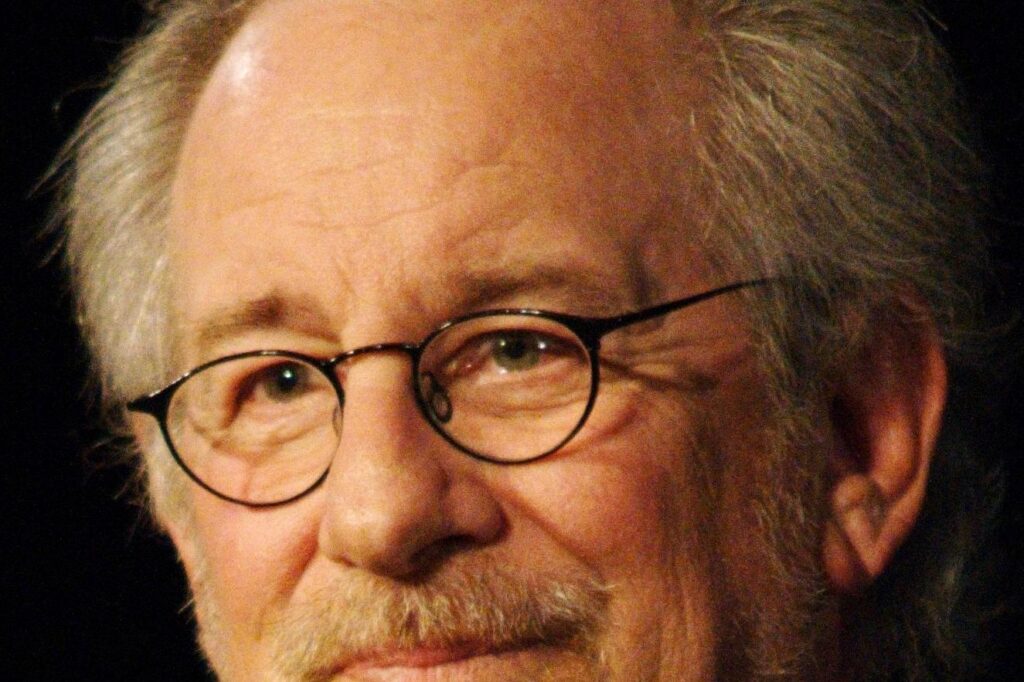
Steven Spielberg, a filmmaker who has conquered nearly every cinematic genre, is finally turning to the Western. His next film, the director’s first in the category, is set to shoot in 2027, with longtime cinematographer Janusz Kamiński already designing its look.
A Late-Career Pivot to the Last Unexplored Frontier
For a director whose filmography spans war epics, science-fiction blockbusters, and historical dramas, the Western has long been the one major category left unexplored. Spielberg’s thematic evolution has taken him from the moral weight of *Munich* (2005) to the political drama of *Lincoln* (2012), and now to a genre defined by its own mythic masculinity. This move is not a departure from his established interests but a culmination of a 50-year arc. His 2022 film *The Fabelmans*, for instance, wove in nostalgia for a frontier-like past, hinting at this personal and artistic evolution. While he has produced Westerns like the 2005 miniseries *Into the West*, he has never sat in the director’s chair for one, making this a significant late-career pivot.
Subverting the ‘Masculine’ Genre
The Western is often labeled a ‘masculine’ genre, built on archetypes of rugged individualism and stoic resolve. Yet, Spielberg’s entire career has been defined by his ability to subvert genre expectations. From the emotional core of *E.T. the Extra-Terrestrial* to the powerful drama of *The Color Purple*, his work consistently challenges the norms of the categories he operates in. His closest genre-adjacent work remains *Indiana Jones and the Last Crusade* (1989), which blended adventure with Western elements but never fully committed to the form. This new project signals a strategic move to apply that same subversive lens to the Western’s foundational myths, potentially redefining them for a modern audience.
A Collaborative Vision for Authenticity
Central to this reinvention is Spielberg’s partnership with Kamiński, his Oscar-winning cinematographer of over three decades. Kamiński is already drawing inspiration from his own Polish upbringing to craft the film’s frontier landscape. He described scouting the Sudeten Mountains in Poland, where the “rolling hills, snow, and fog” reminded him of parts of Montana, suggesting a visual approach rooted in authenticity rather than cliché. In March 2026, he told *The Big Picture*, “There will be horses. There will be guns. There will be no stereotypes.” This commitment, combined with Kamiński’s award-winning focus on visual storytelling over action clichés, points to a Western that prioritizes atmosphere and character over formulaic plots.
High Stakes for a Commercial Comeback
Strategically, this project arrives at a critical moment for Spielberg’s commercial viability. *Disclosure Day* (2026), his most recent film, underperformed at the box office, earning $239 million worldwide against a $300 million budget. This loss, following underperforming releases *West Side Story* (2021) and *The Fabelmans* (2022), marks his third straight commercial stumble. A Western is not typically considered a safe bet for a blockbuster revival, making this a high-stakes gambit for the filmmaker, whose net worth is estimated at $5.3 billion. The secrecy surrounding the project also signals a deliberate departure from the formulaic storytelling of his earlier, more transparently commercial hits like *Jaws* and *Raiders of the Lost Ark*.
A New Chapter on Screen and Stage
What comes next for Spielberg extends beyond this single film. His collaboration with Tony Kushner, the writer behind *Munich* and *Lincoln*, hints at a deeper thematic link between his screen and stage work. The two are also developing a new musical for New York’s Public Theater, slated for a 2027–2028 run, according to *The New York Post*. This potential foray into theater, coupled with the 2027 shoot for his first Western, suggests a period of broad creative reinvention for the 79-year-old director, who has stated he has “no plans ever to retire.”
The film’s planned 2027 shoot means a 2028 release is the earliest audiences can expect to see Spielberg’s vision for the American West realized.
Sources
- Steven Spielberg's next movie is his first Western
- Steven Spielberg
- 'Disclosure Day': Spielberg Tackles Aliens, Secrets and God
- Steven Spielberg's Next Film, a Western, Eyes 2027 Shoot, Janusz Kamiński Confirms — World of Reel
- Exclusive | Steven Spielberg could be directing his first stage musical in NYC
- Steven Spielberg's Long-Awaited First Western Officially Gets Promising Filming Update
Photo: Romain DUBOIS (CC BY-SA 3.0)