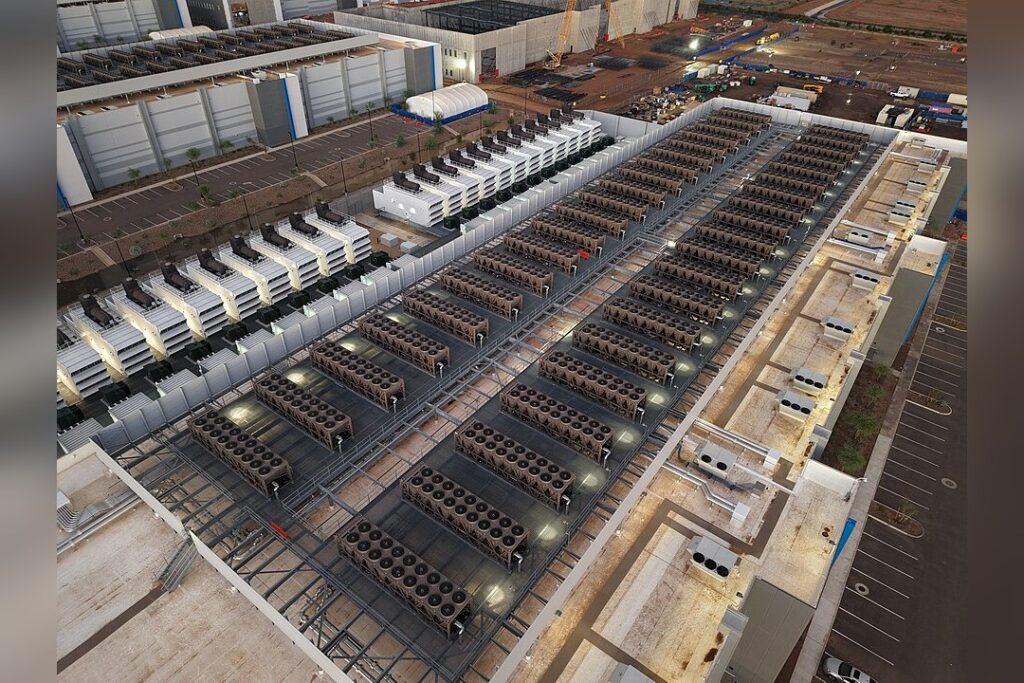
In June 2023, voters in Cascade Locks, Oregon, recalled two Port Authority officials who had backed a $100 million data center. A month later the new board dropped the project. It is one of the small-town fights that a research group called Data Center Watch now counts as part of a national pattern.
The group, which tracks opposition to large data center projects, published a report covering May 2024 to March 2025. Its headline finding is that $64 billion of projects in the United States have been blocked or delayed amid local opposition: $18 billion blocked outright and another $46 billion delayed over the last two years. Everything below is Data Center Watch’s own account, built from local media, government filings, petitions, social media and official statements. The group notes that some of its figures are estimates and may change.
Why residents object
The reasons differ by town, but the report lists the same few again and again: higher utility bills, water consumption, noise, effects on property values and the loss of green space. Projects that build their own power supply tend to draw extra fire over the generating equipment.
The group also issues a caution about its own numbers. Blaming delays only on activists, it says, oversimplifies things, because regulatory compliance, utility availability, incentives and market conditions all shape whether a project moves ahead.
Organised, and not along party lines
Data Center Watch found at least 142 activist groups across 24 states organising against construction and expansion. It split them into small grassroots groups that form around a single project, and formal organisations such as local chapters of the Sierra Club or Clean Water Action, which have staff and can afford lawsuits. It also counted more than 23 online petitions with over 31,000 signatures since 2022.
Virginia is the centre of it, with 42 activist groups. A coalition of Northern Virginia organisations, the Data Center Reform Coalition, was founded there in 2023.
The report says the backlash does not follow ordinary ideological lines. Among elected officials in districts with large proposals who had taken public positions against them, 55% were Republicans and 45% were Democrats. Republicans more often raised tax incentives and strain on the grid, while Democrats tended to stress environmental impact, though concern about power use cut across both.
Projects caught up
The largest blocked project on the list was Tract’s $14 billion proposal in Goodyear and Buckeye, Arizona, withdrawn in May 2024 after residents pressed local authorities over rezoning. Neighbours had raised building heights, noise and strain on local resources. Tract later announced a similar project near the Buckeye airport.
Six projects were counted as blocked and ten as delayed. The biggest delayed one was the $24.7 billion PW Digital Gateway in Prince William, Virginia, led by QTS Realty Trust Inc. and Compass Datacenters. As of March 2025 it was tied up in lawsuits from activist groups, after a county judge dismissed one challenge in October 2024 and the plaintiffs appealed.
In Warrenton, Virginia, voters in November 2024 ousted the remaining council members who had backed Amazon’s proposed campus, and a court order had already stalled that project for at least a year.