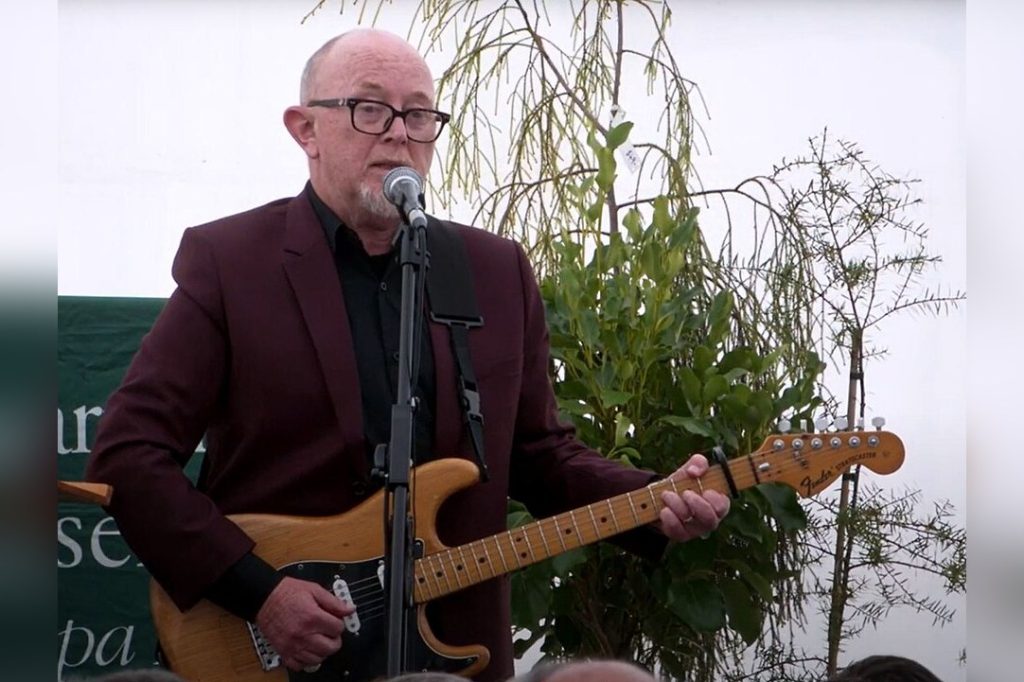
Sir Dave Dobbyn’s studio sits at the end of his garden. No windows. Curved orange and beige brick walls.
Inside, guitars hang from the ceiling. Gold records lean against a piano.
It is a cocoon. And it is where the 69-year-old New Zealand music icon keeps working, even after a Parkinson’s diagnosis in 2022, even after prostate cancer, even after breathing problems. Retirement is not an option.
Dobbyn told journalist Bridget Jones that the idea “doesn’t sit well with me.” He said he thought there would be an off-ramp. There isn’t.
“And I wouldn’t take it if there was, because I’d miss it too much.” The payoff, as he put it: “It keeps you young, it keeps you excited to be alive.” The stakes here are blunt. Dobbyn is not a hobbyist. Making music is what gets him out of bed on tough days.
Without it, the question is what replaces the drive. The answer, from everything he says, is nothing. That is what is genuinely at risk: not a career, but a reason to keep going.
His home tells the same story. Books line the lounge walls.
A doorframe near the fridge is covered in colourful scribbles mapping his family’s growth — though the Dobbyns, the report notes, are not tall stock. A three-legged orange cat lounges on the back step. It gently demands to be carried upstairs for peace and quiet.
The house is cosy, jammed full of life. The studio, at the end of the garden, was already there when the family bought the place.
It is dark inside, but not dreary. Cocoon-like. The curved brick walls radiate their own version of sunshine.
Trinkets and mementos of a life lived large are perched everywhere. This is not a museum. It is a workshop.
A sanctuary built to let him keep working as his body throws new challenges at him. Parkinson’s is a progressive neurological disorder.
It affects movement, balance, coordination. For a musician, those are not small things. Dobbyn also faced prostate cancer.
He has had breathing problems. He is in his late 60s.
The natural expectation, for many people, would be to slow down, to step back, to take the off-ramp he mentioned. He refuses. That refusal is the core of the story.
It is not sentimental. It is practical. Dobbyn has built a life where the work and the person are the same thing.
Taking the work away does not free him. It strands him.
The studio, the guitars, the gold records — they are not decorations. They are infrastructure for staying alive in the fullest sense. What is at stake, in concrete terms, is a working musician’s ability to keep working.
Dobbyn has made clear that he will not stop voluntarily. The question is whether his body cooperates.
For now, the answer is that he keeps going. The studio is there. The cat is there.
The doorframe scribbles are there. The songs keep coming. There is no tidy moral here.
No lesson about fighting spirit that wraps up neatly. Dobbyn is not fighting.
He is working. He is making music because that is what he does. Retirement does not sit well with him.
He would miss it too much. That is the whole thing, stated plainly.
It keeps you young. It keeps you excited to be alive. He said it himself.
{“@context”: “https://schema.org”, “@type”: “NewsArticle”, “headline”: “Sir Dave Dobbyn continues music work from garden studio after Parkinson’s diagnosis”, “description”: “Sir Dave Dobbyn’s studio sits at the end of his garden. No windows. Curved orange and beige brick walls. Inside, guitars hang from the ceiling….”, “datePublished”: “2026-06-26T09:24:00+00:00T09:30:00+00:00”, “author”: {“@type”: “Person”, “name”: “Aibek Nurlan”}, “publisher”: {“@type”: “Organization”, “name”: “InfoPulse Today”, “url”: “https://newsfeed.infopulsetoday.com/”}}