LOS ANGELES, September 15 — Netflix has commissioned an unscripted series built around the Stanford Prison Experiment, the notorious 1971 study that collapsed in less than a week when the people cast as guards turned on the people cast as prisoners. Variety reported the order exclusively on Tuesday. The show is titled “The New Stanford Prison Experiment.” It arrives on the streaming service on Oct. 21, 2026, and its first season runs six episodes of 45 minutes each.
The story begins, as these things do, with a premise. According to the official synopsis, thirty willing participants enter a real prison and are randomly assigned as guards or prisoners.
Thrust into a system of power, hierarchy and control, they will discover whether ordinary people inevitably conform to the roles they are given — or whether empathy, morality and individuality can withstand the forces pushing them in the opposite direction. As the pressure builds and the balance of power begins to shift, the synopsis puts the central question plainly: Does power corrupt? Alfred Street Industries is producing.
Jane Lipsitz, Dan Cutforth, Nan Strait, Dan Volpe, Jeff Grogan and Mike Odair serve as executive producers.
Why the original still haunts the field
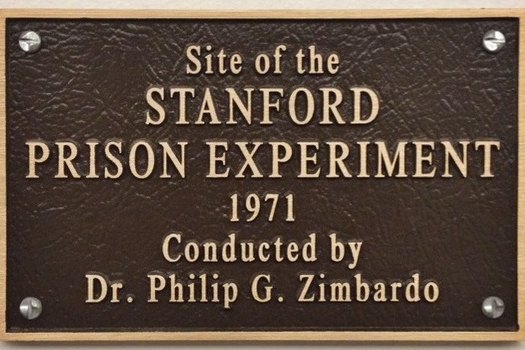
The original experiment was conducted on the Stanford campus in 1971, led by psychology professor Philip Zimbardo. What was designed to run two weeks was ended after less than a week, when those assigned to be guards began abusing those assigned as prisoners, among other ethical concerns. That study, and others around the same period, led to the adoption of stricter rules to prevent harm to human participants.
The episode remains a subject of debate over its methodology and its ethics — a controversy that has never fully settled. Lipsitz said in a statement that the experiment has always fascinated her.
Despite its serious ethical flaws, she said, it asked a fundamental question that feels even more relevant today: how does power affect ethical choices? Getting the chance to reimagine the social experiment, she added, was one of the most intense, exhilarating — and definitely nail-biting — experiences the team has ever had. She described Netflix as an incredible supporter of ambitious projects that take risks, push boundaries and tell challenging stories, and said the producers were grateful to have the service as a partner.
A crowded shelf of retellings
This is not the first time the experiment has been adapted. There have been multiple books, documentaries, docuseries and scripted treatments of the original study, including the feature film “The Stanford Prison Experiment,” released in 2015. What makes the Netflix version different is its format.
This is unscripted — a real prison, real participants, and a production team betting that the dynamics Zimbardo claimed to have found will surface again without a script to guide them. For those involved, the ethical stakes are not abstract.
The original ended early precisely because the roles stopped feeling like roles. Whether a modern production can contain that pressure — and whether audiences will accept the result as entertainment — is the question the series will have to answer. Watch for the first trailer and any further detail on where the series was filmed ahead of its Oct. 21 debut.