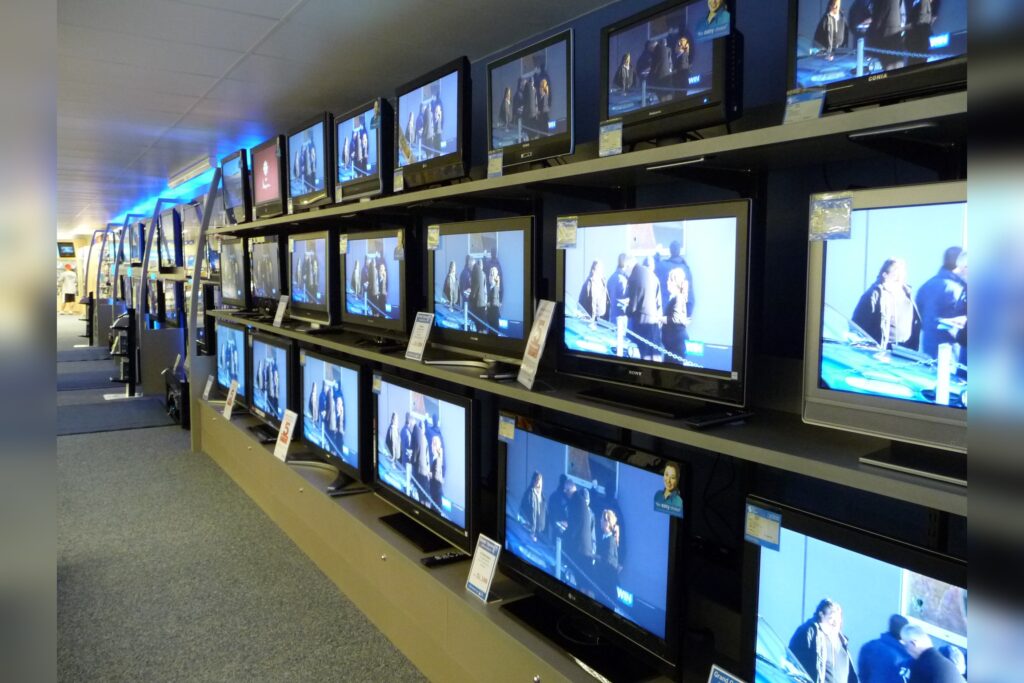
NEW YORK, July 19, 2026 — For as long as there have been broadcasts, someone has been trying to count who’s watching. Audience measurement is the practice that calculates how many people are tuned in—traditionally for radio and television, but also for newspapers, magazines, and now web traffic. It helps broadcasters and advertisers determine not just how many people are listening, but who they are.
The results shape everything from ad rates to which shows survive.
A Brief History of Counting Eyes and Ears
The earliest method was the paper diary, which viewers and listeners filled out by hand. It was simple but flawed—prone to errors, forgetfulness, and a certain amount of wishful thinking. In 1942, the Brazilian company IBOPE launched the first real-time audience measurement service in São Paulo, a major leap forward that predates most modern media research.
In the United States, Nielsen Media Research came to dominate the field for national network television. During the 1960s and 1970s, the company introduced the Storage Instantaneous Audimeter, a device that transmitted daily viewing data over phone lines.
By 1973, national daily ratings were available—a revolution in speed. Nielsen’s sample at the time relied on approximately 1,700 audimeter-equipped homes plus a rotating panel of roughly 850 diary respondents. It was the gold standard, but it had blind spots.
The Shift to Passive Measurement
By the mid-2000s, television networks were publicly blaming Nielsen for inaccurate ratings. The old diary system couldn’t keep up with channel-surfing—that quick thumb-flicking habit of jumping between programs. In plain terms, it was the difference between asking people to keep a food journal and having a camera photograph every bite.
Enter the Local People Meter. The LPM marked a fundamental shift: from active diary-based measurement to passive meter monitoring.
The device in the home automatically detected what was being watched, with no effort from the viewer. The practical upshot was accurate, year-round measurement of local markets, replacing the old system of quarterly “sweeps” periods. It captured channel-surfing far more reliably than paper ever could.
Around the same time, Arbitron developed the Portable People Meter. This device uses a built-in microphone to detect subaudible tones—sounds too quiet for human ears but perfectly readable by the meter—that are embedded in broadcasts by station encoders.
It has even been used to track radio plays inside stores, giving retailers a new view of in-store listening.
What It Means for Viewers and Advertisers
The results of all this counting are often called audience share or market share, and data is broken down by media market—the metropolitan areas that act as the geographic units of TV and radio. Advertisers rely on sampling from these measurement systems to determine the value of ad slots. If the measurement is off, the market itself is distorted.
For the average viewer, this means the shows that get renewed, the commercials that air, and the content that gets funded all trace back to these devices and diaries. Accurate measurement matters far beyond the boardroom.
The Digital Frontier
The picture is getting more complex. The introduction of digital terrestrial television creates a multisignal environment—stations can broadcast multiple channels over the same frequency. Combined with technological convergence—the blurring of TV, internet, and mobile—measurement needs new tools.
Methodologies like audio/video matching or digital watermarking are being developed to track what people watch across devices. The internet has also upended the old geography of media.
As Chris Anderson wrote in the Journal of Advertising Research: “For some internet-based businesses, locality no longer regulates the market.” A small shop can sell to a customer halfway around the world, and advertisers want measurement that follows that audience. The race is on for systems that can capture audiences wherever they are, on whatever screen they use. And with every attempt to count the uncountable, the industry learns a little more about what it really means to be watching.