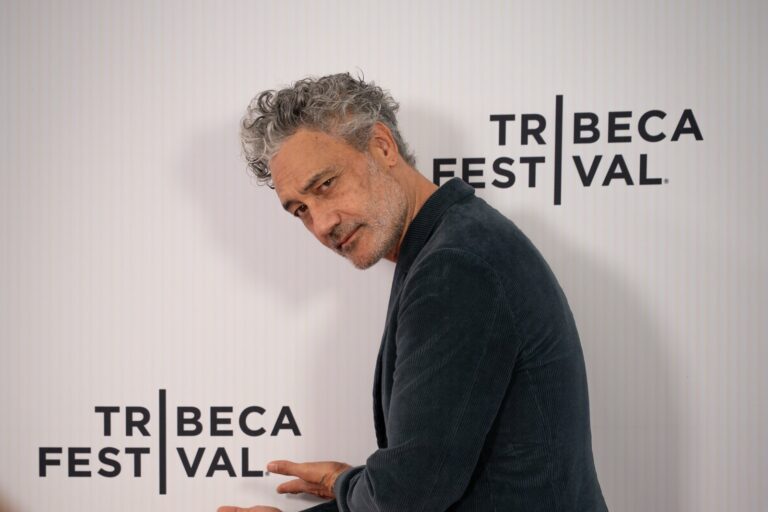
LONDON, October 19, 2026 — Actor Jesse Eisenberg has revealed that winning a Golden Raspberry Award for his role in the 2016 film Batman v Superman: Dawn of Justice effectively froze him out of major studio movie parts. His experience highlights how a satirical accolade can influence professional opportunities and force shifts in career trajectories within the film industry.
From Living Room Pranks to Global Media Spectacle
The Golden Raspberry Awards, often referred to as the Razzies, began as a modest, tongue-in-cheek response to the prestige of the Academy Awards. Co-founded by UCLA film graduates and industry veterans John J. B. Wilson and Mo Murphy in 1981, the ceremony was initially a small social gathering. The first event took place in Wilson’s living room, where about three dozen attendees gathered to mock the films they deemed the worst of the 1980 season. Wilson, a publicist who had spent his career creating film trailers, conceived of the idea after watching the double feature of Can’t Stop the Music and Xanadu.
The event quickly grew in scale. By the second year, attendance doubled, and by the fourth year, the ceremony had gained coverage from CNN and two major wire services. Wilson eventually realized that the timing of the event was a strategic advantage. By scheduling the Razzies for the night before the Oscars, the organization captured the attention of global press members who were already in town for the Academy Awards and looking for entertainment. This timing turned a private party into a global media event that persists today. While the Golden Raspberry Foundation maintains that the award encourages performers and filmmakers to own their badness, the professional repercussions for those involved can be significant.
The Professional Cost of a Mock Award
For many actors, the Razzies represent a public branding that is difficult to shake. Jesse Eisenberg, who played the villain Lex Luthor in Batman v Superman: Dawn of Justice, received a worst supporting actor award for his performance. According to the actor, this recognition served as a clear signal from the industry regarding his standing in blockbuster cinema. Eisenberg noted during a recent talk at the BFI London Film Festival that he felt the industry did not want him in superhero movies after he received the award.
Eisenberg described the film industry as an unstable environment where actors are constantly concerned about whether their careers are on an upward or downward slope. He interpreted his Razzie win as a definitive indicator that he was no longer desired for high-profile studio projects. The actor explained that he felt forced to step back from acting to focus on writing and directing as a survival strategy to keep his career afloat. He emphasized that an actor must be self-aware enough to recognize when the industry is telling them that a particular path is closed. While he had previously received critical acclaim for his performance as Mark Zuckerberg in 2010’s The Social Network, the subsequent Razzie win created a barrier that he felt he could not overcome in the studio system.
Industry Perception and the Power of the Narrative
The influence of the Razzies extends beyond individual actors to the broader perception of film projects. Batman v Superman: Dawn of Justice, which grossed $424.1 million at the global box office, ultimately took home four Razzie awards, including worst screenplay, worst sequel, and worst screen combo for stars Henry Cavill and Ben Affleck. The accumulation of these awards reinforces a narrative of failure that can follow a production long after its release. This branding can impact the future casting decisions of studios that are often risk-averse and sensitive to public perception.
The Razzies have also demonstrated an ability to target specific performers through the creation of custom categories. In 2022, the organization introduced a dedicated category for the worst performances by Bruce Willis in a series of low-budget films. This move highlighted how the awards can consolidate a negative reputation for an actor, potentially influencing how casting directors view their viability for future projects. The record for the most Razzie wins is currently held by Sylvester Stallone, who has received 12 of the statuettes throughout his career.
Survival Strategies in an Unstable Industry
Against this backdrop, the career pivot becomes a common response for those who find themselves on the wrong side of industry opinion. For Eisenberg, the transition to directing was not merely a creative choice but a necessary adaptation to an industry that he felt had rejected his presence in major films. He pointed out that unsuccessful actors might continue to seek roles in genres that do not want them, but he chose to follow the feedback provided by the industry.
This dynamic illustrates the tension between the lighthearted nature of the Razzies and the reality of professional survival in Hollywood. While the awards are marketed as a parody, the consequences for those labeled as the worst of the year can be tangible. Actors often feel that they must navigate these perceptions by changing their roles or moving behind the camera to maintain their longevity. As the industry continues to evolve, the Razzies remain a fixture that, while satirical in origin, acts as a barometer for how certain performances are received and how that reception can dictate the future of an actor’s career. The case of Eisenberg serves as a reminder that in the corridors of studio power, even a joke award can carry weight when it aligns with a broader industry consensus.
Sources
- Jesse Eisenberg Says He ‘Couldn’t Get Movie Studio Parts Anymore’ After Winning a Razzie for ‘Batman v Superman’: ‘The Industry Did Not Want Me to Be in a Superhero Movie’
- Golden Raspberry Awards
- Jesse Eisenberg Says He ‘Couldn’t Get Movie Studio Parts Anymore’ After Winning a Razzie for ‘Batman v Superman’: ‘The Industry Did Not Want Me to Be in a Superhero Movie’
Photo: Self made based upon work by the authors shown above / wikimedia (CC BY-SA 3.0)